
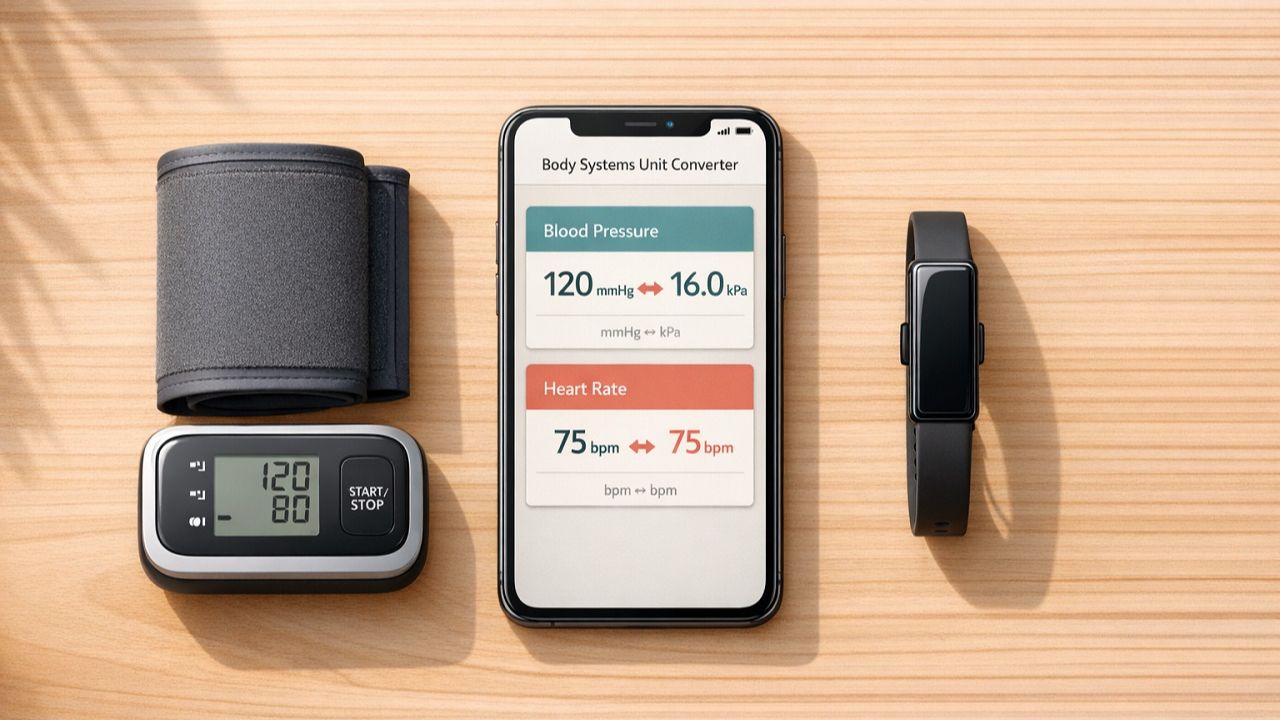
Body Systems Unit Converter
Feb 24, 2026Understanding Health Metrics with a Body Systems Converter
When it comes to tracking wellness, numbers matter, but they can be confusing if you’re juggling different units. That’s where a tool for converting health measurements shines. Whether you’re a fitness enthusiast, a caregiver, or just curious about your vital signs, having a reliable way to switch between units like mmHg and kPa for blood pressure can make all the difference.
Why Unit Conversion Matters for Health
Imagine getting a medical reading in a unit you’re not familiar with. Maybe your device measures heart rate in one format, but your doctor uses another. Or perhaps you’re reading up on respiratory norms and need to align the data with your own stats. A health metrics converter simplifies this process, letting you focus on what the numbers mean rather than how to calculate them. It’s especially useful for anyone monitoring chronic conditions or comparing data across regions with different standards.
Beyond the Numbers
Tools like these aren’t just about math; they’re about clarity. By providing context alongside results, they help demystify complex readings. So next time you’re puzzled by a measurement, remember there’s an easy way to break it down and stay informed about your body’s signals.
Use our Body Systems Calculator alongside this converter to explore your heart rate zones, blood pressure, and other vital metrics in a way that’s personalized to you.
FAQs
What types of health measurements can I convert with this tool?
You can convert a variety of body system measurements, like blood pressure from mmHg to kPa, heart rate in beats per minute to other metrics if applicable, and even respiratory rates. We’ve focused on the most common health metrics people track, so you’ve got a handy way to switch between units without digging through complicated charts or formulas.
How accurate are the conversions provided by this tool?
The conversions are based on standard, widely accepted formulas used in medical and health contexts. We’ve double-checked the math to ensure precision, but remember, this tool is for informational purposes. If you’re making health decisions, it’s always a good idea to consult a professional with your results.
Why do the results include context about normal ranges?
We include a brief note on normal ranges or typical values to help you understand what the numbers mean. For instance, if you convert a blood pressure reading, you’ll see a quick mention of what’s considered healthy for most adults. It’s just a little extra info to give you perspective, think of it as a friendly nudge, not medical advice!

