
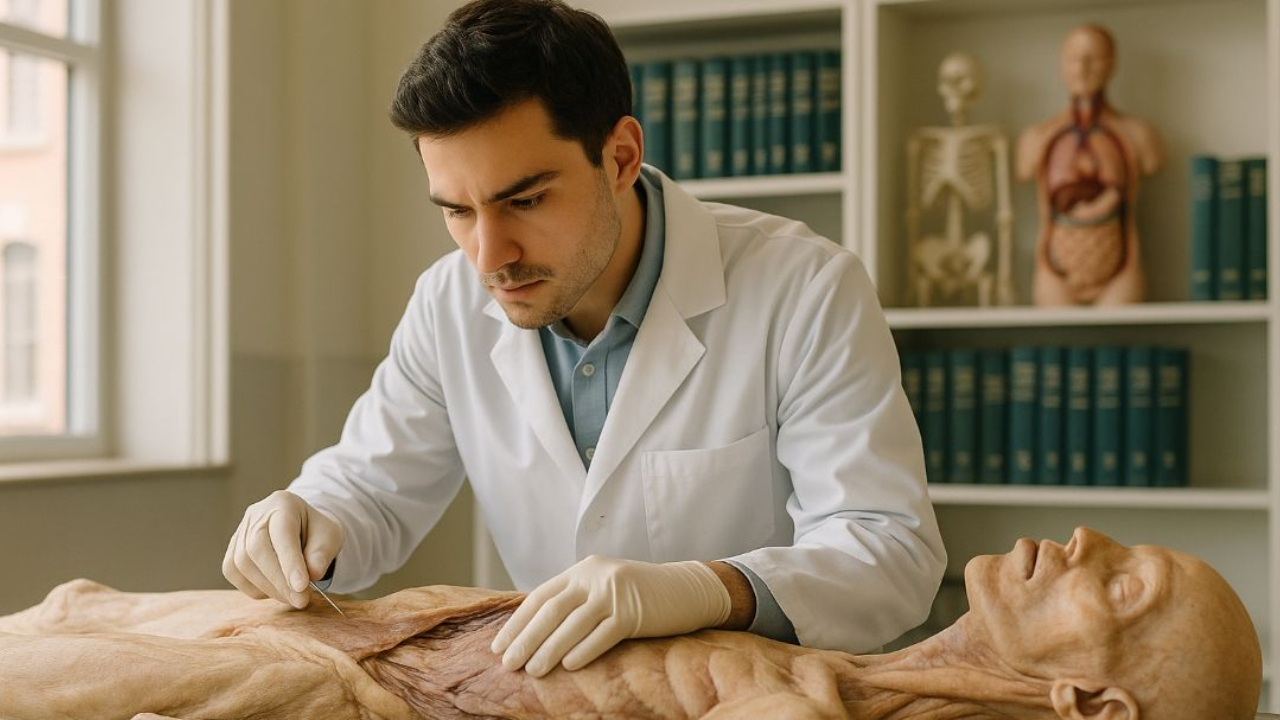
Cadaver-Based Learning: Role in Academic Careers
Dec 24, 2025Cadaver-based learning is a hands-on approach to anatomy education that uses real human cadavers to teach students about the structure and function of the human body. This method offers experiences that go beyond textbooks and digital tools, helping students develop critical skills for academic and healthcare careers. Here's why it matters:
- Deepened anatomical understanding: Cadavers provide a realistic, three-dimensional view of human anatomy, helping students grasp details that illustrations or simulations can't.
- Skill development: Dissection sharpens fine motor skills, critical thinking, and teamwork, all essential for educators and healthcare professionals.
- Empathy and professionalism: Working with cadavers fosters respect for the human body and helps students build a professional identity.
- Preparation for teaching and research: Cadaver-based training equips future educators and researchers with the expertise to teach anatomy effectively and conduct meaningful studies.
Benefits of Cadaver-Based Learning for Academic Development
Improved Anatomical Knowledge and Retention
Studying anatomy with human cadavers offers a hands-on, three-dimensional experience that goes far beyond what textbooks or digital tools can provide. This immersive approach engages multiple senses, helping students truly grasp the complexities of human anatomy.
For example, working with cadavers allows students to trace nerves through tissues, differentiate between muscle and fascia, and identify key anatomical landmarks like the triangles of the neck, the cystohepatic triangle, zones of the hand, the inguinal triangle, and the inguinal canal. These hands-on discoveries provide insights that static images or diagrams simply can't replicate.
Beyond just understanding, cadaver-based learning leaves a lasting impression. Many healthcare professionals vividly recall their early dissection experiences because of the depth of knowledge they gained. The physical act of dissection also hones fine motor skills and precision with instruments - skills that are critical for procedural techniques.
Research backs these benefits. Studies show that working with cadavers not only deepens knowledge of anatomy and physiology but also boosts confidence in applying this knowledge to patient care. The tactile experience - feeling the texture, weight, and structure of tissues - adds a level of authenticity that virtual simulations can't match. This kind of learning builds a solid foundation for critical thinking and collaborative problem-solving.
Critical Thinking and Problem-Solving Skills
Cadaver dissection doesn't just teach anatomy - it sharpens analytical and teamwork skills. Each cadaver is unique, presenting variations that challenge students to think critically, adapt their understanding, and solve problems. These skills are essential for researchers and educators alike.
Working in teams during dissections mirrors the collaborative nature of academic and clinical environments. Students learn to navigate real-world anatomical differences while negotiating roles, resolving conflicts, and integrating diverse perspectives. This teamwork not only improves exam performance but also prepares students for designing research projects and teaching complex topics.
The dissection process itself - whether it's taking on leadership roles or overcoming unexpected challenges - builds self-confidence and advocacy. Exposure to the natural variations in human anatomy helps students ask better research questions and design studies that reflect the full range of normal anatomy.
Empathy and Professional Identity Development
Cadaver-based learning offers a unique opportunity to confront the realities of life and death in a respectful and thoughtful setting. This experience fosters empathy and helps shape a professional identity that other educational methods struggle to achieve.
Many anatomy programs incorporate reflective practices such as donor blessing services, memorial ceremonies, and guided discussions. These activities help students process their experiences and develop a balanced perspective on health and mortality. This perspective is crucial for educators and researchers as they navigate their professional responsibilities.
The tactile nature of dissection deepens students' appreciation for the human body’s complexity, nurturing empathy and a sense of connection. This hands-on interaction fosters a profound respect for the human form, influencing how educators and researchers interact with patients, students, and research subjects. Additionally, cadaver-based training has been shown to increase confidence in patient interactions and enhance understanding of interprofessional roles - qualities that are essential for academic growth.
Finally, the collaborative atmosphere of the anatomy lab promotes professionalism. Working closely in small groups teaches effective communication, teamwork, and a strong sense of responsibility - skills that are vital for success in academic and clinical settings.
What It's Like Working With Dead Bodies
How Cadaver-Based Learning Improves Teaching Skills
Confidence and Credibility in Teaching Anatomy
When it comes to teaching anatomy, cadaver-based learning provides educators with a level of authority and confidence that goes beyond textbook knowledge. The hands-on experience of dissection allows them to speak with a depth of understanding that students recognize and respect.
Educators who have worked with cadavers can answer questions with precision, drawing from their firsthand experience. They’ve felt the textures of tissues, navigated through layers of fascia, and grasped the three-dimensional relationships between organs. This kind of exposure enables them to explain anatomical concepts in a way that feels authentic and grounded - not just a repetition of textbook diagrams or illustrations.
Additionally, educators who have traced nerves and identified critical landmarks during dissection are better equipped to guide students through unexpected anatomical variations. These experiences sharpen manual skills and critical thinking, both essential for clinical practice.
Medical students often notice this confidence, reporting that educators with cadaver experience not only have a deeper grasp of anatomy but also inspire trust in their ability to connect this knowledge to patient care. The tactile and visual impressions left by dissection - like the weight and texture of organs - stay with educators throughout their careers, helping them deliver consistent and detailed instruction.
This deep-seated confidence naturally translates into creating engaging and interactive teaching environments.
Creating Interactive and Memorable Learning Experiences
Cadaver-based teaching empowers educators to design interactive lessons that leave lasting impressions on students. In the anatomy lab, face-to-face instruction fosters active participation and peer collaboration. Students can work together, quiz one another, and get immediate feedback, making the learning process both dynamic and effective. Studies show that team-based dissection not only improves exam performance but also enhances students’ overall perception of the learning experience.
A great example of cadaver-based engagement comes from the Institute of Human Anatomy, which has amassed over 24 million followers and 2 billion video views. By centering lessons around cadavers, educators encourage students to explore anatomical variations, sparking curiosity and critical thinking through hands-on discovery.
This approach also taps into multiple senses, creating memories that stick with students long after they leave the classroom. Interprofessional sessions in the cadaver lab - bringing together students from fields like medicine, dentistry, physical therapy, and physician assistant programs - add another layer of depth. These sessions foster collaboration across disciplines, preparing students for real-world teamwork while helping them adapt to anatomical variability in clinical practice.
Teaching Anatomical Variations and Clinical Applications
Cadaver-based learning doesn’t just teach anatomy - it prepares educators to address the clinical significance of anatomical variations. Every cadaver is unique, offering a firsthand look at the diversity of human anatomy. This exposure equips educators to guide students in understanding the variability they’ll encounter in the clinic.
By sharing real-life examples from their dissection experience, educators can explain how anatomical differences impact surgical techniques or treatment outcomes. This shifts anatomy education from rote memorization to a more nuanced understanding of its clinical relevance.
The three-dimensional perspective provided by cadaver dissection is another game-changer. Over 83% of students find it invaluable for grasping spatial relationships that can’t be fully conveyed through two-dimensional images. This deeper understanding enables educators to help students formulate meaningful research questions and design studies that take anatomical diversity into account.
Surveys highlight the benefits of cadaveric dissection: 90.1% of students agree it deepens understanding, 75.1% say it provides lasting knowledge, and 84.5% find it makes learning more engaging. These advantages not only enhance the learning experience but also elevate the quality of teaching, ensuring that educators can guide their students toward academic and professional success.
Cadaver-Based Training and Academic Research
Understanding Human Variation for Research
Working with cadavers offers researchers a firsthand look at the diversity of human anatomy - something no textbook or digital model can fully capture. This hands-on experience is invaluable for designing research studies that reflect the complexities of real human variation. Researchers who have directly observed how anatomical structures differ from one individual to another are better equipped to frame sophisticated research questions and develop methodologies that address these differences.
Documenting and understanding these variations significantly improves research quality. By distinguishing between natural anatomical differences and true anomalies, researchers can interpret their findings with greater accuracy. Additionally, cadaver-based training provides essential insight into clinically significant anatomical landmarks like the triangles of the neck, the cystohepatic triangle, zones of the hand, and the inguinal canal. These landmarks are crucial for both surgical applications and anatomical investigations. Such foundational knowledge not only enhances individual research but also encourages collaborative approaches to solving complex problems.
Opportunities for Collaborative Research
In academic environments, cadaver labs are hubs for interdisciplinary collaboration. These settings bring together professionals from various healthcare fields - medicine, dentistry, physical therapy, occupational therapy, and physician assistant programs - to work with donor cadavers as shared learning tools. This collaborative environment not only enhances learning but also fosters partnerships that often translate into research projects and publications. Studies have shown that team-based learning in cadaver labs improves exam performance and enriches students' overall educational experience.
These labs also serve as a platform for interprofessional education, where students from different disciplines build early connections. Near-peer teaching sessions in cadaver labs are particularly valued, as they help form networks that often last well into professional careers. For many students, the cadaver lab is their first experience working as a cohort, creating a shared professional language and environment that lays the groundwork for future research and clinical practice. Beyond formal research, the teamwork required in dissection labs sharpens skills like negotiation, conflict resolution, and integrating diverse perspectives - skills that are critical for successful collaboration in any healthcare setting.
Advancing Knowledge Through Cadaver-Based Studies
Cadaver-based research provides insights that virtual technologies simply cannot replicate. Dissection offers a tactile, three-dimensional understanding of anatomy, which is essential for studies that require detailed tissue analysis or investigations into how physical properties influence anatomical function. This hands-on approach allows researchers to study anatomical variations, pathological conditions, and clinical correlations in their natural context, producing knowledge with immediate relevance to healthcare.
These studies support a wide range of research methodologies. Descriptive studies benefit from direct observation and measurement of tissues, while comparative studies can explore differences across variables such as age, sex, or population groups under controlled conditions. Cadaver models are also indispensable for testing and refining surgical techniques before they are applied in clinical settings.
For students and early-career researchers, the experience of working with cadavers leaves a lasting impression. Many recall their dissection experiences vividly, underscoring the deep, long-term educational value of this training. Beyond education, cadaver-based research strengthens teaching credentials and enhances research portfolios. Publishing findings in peer-reviewed journals not only establishes credibility in the field of anatomical science but also contributes to the research productivity of academic institutions.
Institutions that invest in cadaver labs and donor programs reap long-term benefits. A multimodal approach that includes cadaver dissection is often the most cost-effective and impactful way to train future researchers and generate publishable studies. Facilities like those at the Institute of Human Anatomy exemplify how state-of-the-art cadaver labs can advance anatomical research while fostering academic growth and excellence.
Combining Cadaver-Based and Modern Learning Methods
Using Cadaver-Based Learning with Digital Resources
Anatomy education thrives when it blends traditional cadaver dissection with modern digital tools. Cadaver-based learning offers a hands-on experience that deepens understanding, while digital resources provide accessible and repeatable ways to reinforce that knowledge. Together, they create a cost-effective and impactful learning approach for both institutions and students.
Cadaver dissection delivers something irreplaceable - direct, tactile experiences. Students can feel the texture, weight, and size of tissues, which virtual tools simply can't replicate. On the other hand, digital platforms allow learners to revisit material at their own pace, making them a powerful complement to physical dissection.
Virtual dissection tools and CT-based 3D anatomy platforms work best as supplements rather than replacements for cadaveric experiences. These tools consistently boost both student performance and confidence when used alongside hands-on study. Resources like Teach Me Anatomy, with its comprehensive articles and simplified 3D models, provide quick reference for foundational knowledge. Anatomy.app adds value with interactive, rotatable 3D structures that help students visualize anatomy from multiple angles, which is especially helpful for pre-lab preparation and post-lab review. Meanwhile, platforms such as Anatomy Bootcamp offer extensive question banks that include hundreds of real cadaveric images for practical exam prep. Studies have shown that students who integrate digital 3D platforms with traditional methods often report a clearer understanding of anatomical relationships and improved confidence compared to those using traditional methods alone.
The Institute of Human Anatomy exemplifies this blended approach. By November 2025, they had amassed over 24 million followers and 2 billion video views by combining cadaver instruction with a robust digital presence. Their AI tool, Jonathan, further enhances learning by offering personalized, 24/7 support for anatomy and physiology questions. This allows students to dive deeper into topics and review material whenever needed, complementing the hands-on experience.
Interestingly, research suggests that prior anatomical knowledge plays a bigger role in short-term retention than the learning method itself. This reinforces the idea that cadaver-based instruction lays a strong foundation, while digital tools expand and solidify that knowledge through different cognitive pathways.
Implementing Multiple Teaching Strategies
To maximize student engagement and understanding, educators must thoughtfully combine dissection with emerging technologies. Each method has unique strengths, and together they create a more comprehensive learning experience.
Team-based cadaver dissection paired with digital tools not only improves exam performance but also encourages teamwork. While the hands-on lab sessions offer peer interaction and faculty guidance, digital platforms allow students to explore anatomical structures independently between labs. This balance ensures continuous learning and preparation.
Interprofessional activities in cadaver labs are another key strategy. Bringing together students from fields like medicine, dentistry, and physical therapy fosters collaboration and helps them develop a shared professional language. Digital tools can extend these lessons by enabling ongoing discussions and reviews outside the lab environment.
Cadaver dissection also introduces students to the variability of human anatomy, which digital models often lack. These unexpected variations encourage critical thinking and a deeper appreciation of human diversity. When paired with digital resources for consistent review, this approach prepares students for real-world clinical challenges.
Faculty presence in cadaver labs is crucial for answering questions and reinforcing learning. Between sessions, video-based training and other multimedia tools help students review and prepare for the next lab. This thoughtful integration enriches the overall educational experience for both students and educators.
Institutional Support for Cadaver-Based Programs
Maintaining a hybrid educational model requires strong institutional backing. Combining cadaver-based programs with modern technologies demands significant investment but offers long-term benefits like improved student outcomes and enhanced teaching quality.
Institutions must allocate resources for lab space, equipment, cadaver procurement, and faculty training. Shared interprofessional lab spaces and tiered investments in both cadaver and digital resources can help optimize costs while maintaining program quality . For many students, cadaver labs are where they first develop a professional identity, laying the groundwork for future collaboration across disciplines.
Budget planning should address both traditional and digital components. While cadaver dissection involves higher upfront costs, digital tools like multimedia modules and video-based training are more scalable and cost-effective for larger groups.
Faculty development is equally important. Educators need training in both dissection techniques and new technologies to effectively merge the two approaches. Programs that equip faculty with skills in virtual dissection tools and 3D visualization software ensure that hands-on learning remains at the core of anatomy education.
Institutions should also support the emotional aspects of cadaver-based learning. Activities like donor blessing services, memorials, and guided reflections help students process their experiences and develop a deeper sense of professional identity. Though resource-intensive, these programs significantly enhance the educational journey.
The lasting impact of cadaver dissection - memories that healthcare professionals carry throughout their careers - combined with measurable improvements in knowledge, confidence, and collaboration, underscores the importance of sustaining these programs. When paired with modern learning technologies, cadaver-based education becomes a cornerstone of medical training.
Conclusion
Key Takeaways
Cadaver-based learning provides a strong foundation for academic and professional success in the medical field. Working directly with human cadavers offers tactile experiences that virtual tools simply can't replicate. These hands-on dissections not only deepen anatomical knowledge but also encourage critical thinking and problem-solving by exposing students to real-world anatomical variations. Along the way, they also help cultivate empathy and a sense of professional identity.
Research from surgical residency programs highlights how cadaveric dissection boosts trainee confidence, sharpens anatomical understanding, and refines surgical skills, all of which contribute to greater clinical independence. Additionally, team-based dissections have been shown to enhance exam performance and foster more positive attitudes among students.
These experiences lay the groundwork for a more integrated and evolving approach to anatomy education.
The Future of Anatomy Education
Even as technology continues to advance, cadaver-based learning will remain a key element of anatomy education. The future lies in blending hands-on dissection with digital tools that enhance learning and accessibility.
For example, the Institute of Human Anatomy combines cadaver instruction with digital resources, including an AI-powered guide that provides personalized support for anatomy-related questions. This hybrid approach demonstrates how technology can complement, rather than replace, the irreplaceable benefits of hands-on learning.
Many academic institutions are now adopting multimodal strategies that merge traditional cadaver-based programs with innovative digital tools. While virtual dissection platforms and 3D anatomy models are excellent supplements, they cannot replace the unique value of working with real human cadavers - developing fine motor skills, grappling with the realities of mortality, and fostering a strong professional identity.
For those pursuing careers in anatomy education and research, maintaining a balance between cadaver-based learning and digital advancements is essential. These hands-on experiences not only prepare educators and researchers to teach effectively but also ensure that the next generation of healthcare professionals is equipped with the skills and insights needed to excel in the field. As anatomy education evolves, the timeless benefits of direct cadaver engagement will continue to play a critical role.
Jonathan Bennion Dissects Human Bodies for Anatomy Education
FAQs
How does learning with real cadavers help students develop empathy and professionalism compared to using digital tools?
Cadaver-based learning offers an irreplaceable, hands-on opportunity to explore the human body while cultivating a deep respect for those who have donated their bodies to science. This direct interaction not only enhances anatomical understanding but also encourages students to connect with the humanity behind their studies, fostering empathy and a strong sense of ethical responsibility.
Although digital tools are helpful for visualizing anatomy, working with actual cadavers provides a level of realism that digital models simply can't replicate. Students gain practical experience, such as handling delicate tissues, while also learning to honor the contributions of donors. This immersive approach equips future healthcare professionals and academics with both the technical expertise and emotional awareness they need for their careers.
How does cadaver-based learning prepare students for academic and healthcare careers?
Cadaver-based learning offers students an irreplaceable opportunity to gain hands-on experience that directly benefits both their academic pursuits and future careers in healthcare. Engaging with real human cadavers allows students to build a comprehensive understanding of human anatomy, enhancing their ability to teach, conduct research, and apply anatomical insights in real-world scenarios.
This approach also hones critical skills like spatial awareness, meticulous attention to detail, and effective problem-solving - qualities that are indispensable for educators, researchers, and healthcare practitioners alike. Beyond technical skills, it instills a deep respect for the human body, an essential mindset for anyone working in academic or clinical settings.
How does cadaver-based learning improve the teaching skills of anatomy educators?
Cadaver-based learning provides anatomy educators with invaluable hands-on experience, allowing them to explore the intricacies of the human body using real human specimens. This direct interaction helps them grasp complex anatomical structures and physiological processes in a way that textbooks simply can't replicate. As a result, they can teach these concepts with greater clarity and confidence.
Working with cadavers also enables educators to refine their teaching techniques. For instance, they can highlight real-life anatomical variations, making lessons more engaging and relatable. This method bridges the gap between theoretical knowledge and its practical applications, offering students a deeper understanding of how anatomy translates into real-world healthcare and research scenarios.

