
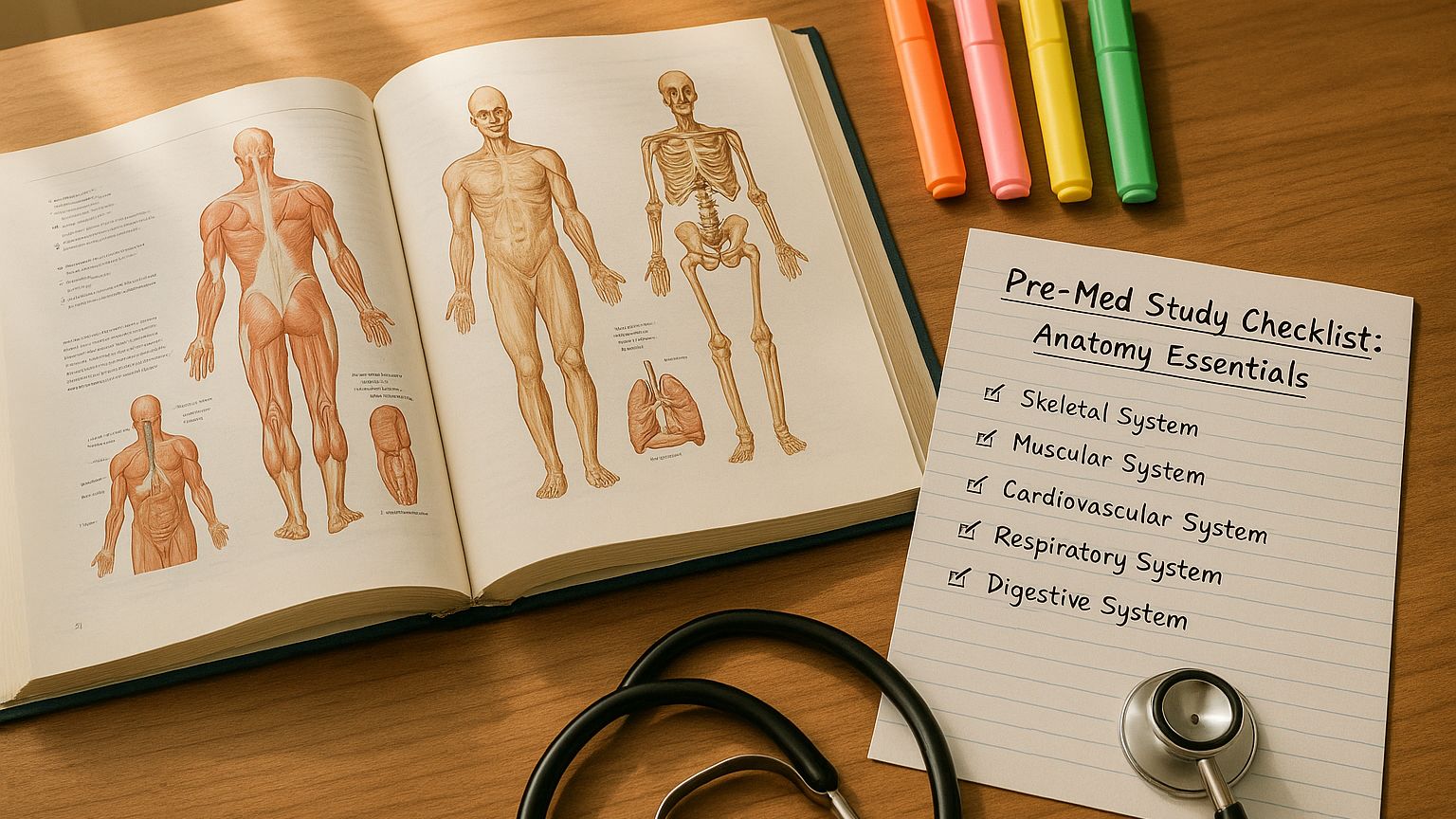
Pre-Med Study Checklist: Anatomy Essentials
Dec 09, 2025Learning anatomy as a pre-med student can feel overwhelming, but it’s a critical step toward success in medical school and beyond. To make it manageable, focus on these key points:
- Use the Right Resources: Start with trusted textbooks like Gray’s Anatomy for Students and Netter’s Atlas of Human Anatomy. Pair them with digital tools like eBooks and flashcards for effective learning.
- Prepare for Labs: Bring essential supplies like a lab coat, gloves, and a dissection kit. Review material beforehand to make the most of cadaver sessions.
- Study Actively: Break topics into smaller sections, draw structures from memory, and use spaced repetition to retain information over time.
- Connect to Practice: Relate anatomy to clinical scenarios, such as linking blood supply issues to specific conditions. Practice interpreting imaging like X-rays and CT scans.
How to Study Anatomy in Med School 💀 5 Fool-Proof Steps
Study Materials You Need for Anatomy
To build a strong foundation in anatomy, you’ll need a mix of reliable, visual, and interactive study tools. Start with high-quality textbooks and atlases to ground your understanding, then expand with digital tools and hands-on resources.
Top Textbooks and Atlases
- Gray's Anatomy for Students: A go-to resource for beginners, this textbook combines detailed anatomical knowledge with clinical connections, making it invaluable throughout medical school.
- Netter's Atlas of Human Anatomy: Known for its stunning hand-drawn illustrations, this atlas simplifies complex anatomical relationships. Its consistent style and color-coded visuals make it easier to memorize structures compared to cadaver photos.
- Moore's Clinically Oriented Anatomy: This textbook bridges the gap between basic anatomy and its clinical relevance. With case studies and clinical boxes, it highlights how anatomical structures function in real-world health and disease scenarios.
- Grant's Atlas of Anatomy: By blending dissection photos with illustrations, this atlas offers multiple perspectives of the same structures, making it particularly helpful for exams and clinical practice.
Digital Study Resources
For a modern twist on anatomy learning, Institute of Human Anatomy’s digital study bundles are a fantastic option. These resources combine expert-crafted visuals with concise summaries, connecting textbook knowledge to practical lab insights.
Flashcards and Anatomy Models
Interactive tools like flashcards and physical models can reinforce your learning and make abstract concepts more tangible.
- Kaplan Anatomy Flashcards: These are excellent for memorizing anatomical terms using spaced repetition. Customizing cards to include both visual prompts and functional explanations can boost retention.
- IOHA Anatomy Flashcards :This set of 50 flashcards explores the essential concepts of human anatomy. Cards are organized into 11 systems and are color-coded for easy reference. The structures are beautifully illustrated in exceptional detail. Ideal for medical students or anyone interested in human anatomy.
- Physical anatomy models: Tactile learning tools like skeletal models help clarify joint movements and landmarks. Disassemblable models of the heart and brain allow you to explore relationships between chambers, valves, and spatial connections.
- Anatomical coloring books: Resources like The Anatomy Coloring Book by Wynn Kapit combine detailed diagrams with hands-on coloring activities, engaging multiple senses to enhance focus and memory.
- Plastinated specimens and anatomical charts: Keeping these visible during study sessions reinforces key structures through repeated exposure, helping you retain critical details.
How to Prepare for Cadaver Lab Sessions
Before heading into a cadaver lab session, make sure you're fully equipped. Here's what you'll need:
Essential Lab Supplies
- A ¾-length white laboratory coat to maintain hygiene and professionalism.
- Long pants, preferably scrubs, for appropriate coverage and comfort.
- Non-latex gloves to ensure safety and avoid allergies.
- Your dissection kit, which is vital for the hands-on work.
- A clipboard for taking organized notes during the session.
- Protective eyewear to shield your eyes from potential splashes or debris.
Always double-check your program's specific guidelines before attending a session. Following these steps will help you stay prepared and maintain proper lab etiquette.
Digital Tools and Interactive Learning Options
Incorporating digital tools into your study routine can make anatomy more accessible and engaging. These tools complement traditional resources and lab experiences, transforming your device into an interactive learning hub that simplifies even the most complex structures.
3D Anatomy Apps
With apps like Anatomy.app, your mobile device becomes a virtual anatomy lab. This app provides detailed 3D models that you can rotate, zoom, and explore. It also includes quizzes to track your progress across different anatomical categories, helping you identify and focus on areas that need extra attention.
Beyond these interactive models, online content offers additional layers of understanding to enrich your studies.
Institute of Human Anatomy Online Content
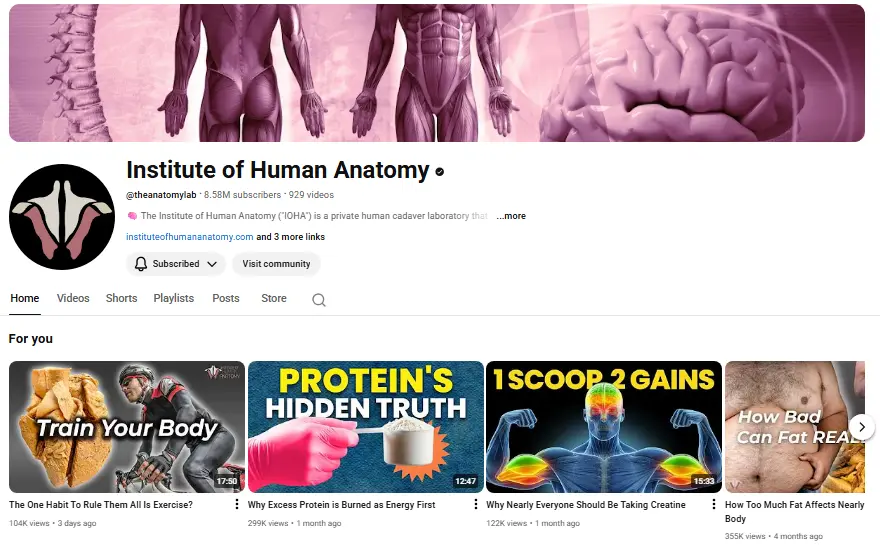
The Institute of Human Anatomy provides a wealth of online resources that connect theoretical concepts with practical applications. Their video library uses cadaveric specimens to explain anatomical structures, showcasing natural clinical variations you might encounter in medical school or practice.
Interactive courses combine video lessons with self-assessment tools, letting you study at your own pace while keeping track of your progress. These resources are designed to help you build a strong foundation for your anatomy knowledge.
Quiz Tools and Self-Testing Resources
Digital quiz platforms are invaluable for reinforcing your anatomy knowledge through interactive and varied formats.
- TeachMeAnatomy: This platform offers over 1,700 multiple-choice questions, a custom quiz builder, progress tracking, and peer comparison features, all optimized for mobile use.
- PracticeAnatomy.com: Adapts question difficulty based on your performance, using high-quality anatomical images to track your growth and highlight areas needing improvement.
- Free-Anatomy-Quiz.com: Features over 200 multiple-choice quizzes covering anatomy, physiology, and pathologies. Quizzes can be repeated, and downloadable resources make studying flexible.
- Anatomy Bootcamp: Includes extensive question banks, recall quizzes, nine full-length practical exams with cadaveric images, and a tagging system to target weaker areas.
- IOHA Quiz Packs: Multiple quizzes focused on specific body systems or topics, designed to reinforce learning from IOHA videos and materials, ideal for self-assessment and exam prep.
For a more casual approach, free platforms like Brainscape, Cram, and Quizlet offer anatomy flashcard sets. These platforms include study modes like games and timed quizzes, making it easy to fit quick study sessions into your day - whether you're commuting or taking a break between classes.
Study Methods That Work for Anatomy
Mastering anatomy goes beyond memorizing structures - it’s about understanding how systems interconnect and retaining that knowledge for the long haul. To succeed, you need a strategy: consistent study habits, active engagement with the material, and tying it all back to practical medical applications.
Creating a Study Schedule
When it comes to anatomy, consistency always beats cramming. Regular, focused study sessions help solidify your understanding. Plan daily study blocks and break the curriculum into manageable chunks. For instance, dedicate an entire week to the cardiovascular system: spend Monday and Tuesday on heart anatomy, Wednesday on major blood vessels, Thursday on circulation pathways, and wrap up the week with review and self-testing on Friday.
Tackle tougher topics when your mind is sharpest. If neuroanatomy feels overwhelming, schedule those sessions for the morning when you’re more alert. Save lighter reviews for times when your energy dips, like later in the day.
Incorporate the spaced repetition method into your routine. This approach - reviewing material at increasing intervals - has been proven to boost long-term memory better than cramming everything at once.
Active Learning Methods
Once your schedule is set, shift your focus to active learning techniques that help the material stick. Drawing anatomical structures from memory is a great way to test your recall and pinpoint gaps in your understanding. Start with basic outlines and gradually add details like muscle attachments, nerve pathways, or blood supply. Don’t worry about artistic flair - accuracy is what matters.
Collaborative learning can also be a game-changer. Join a small study group where each person tackles a specific system and presents it to the group. Explaining concepts, like tracing the path of blood through the heart, helps solidify your understanding and moves you from rote memorization to true comprehension.
Another great strategy? Turn anatomy into a story. For example, narrate the journey of food from the mouth to the stomach, describing each structure it encounters along the way. These narratives help you understand systems as a whole rather than isolated parts.
Use color-coding in your notes and diagrams to organize information visually. Assign colors to different tissue types - red for arteries, blue for veins, yellow for nerves, and green for lymphatics. It’s a simple trick that makes complex diagrams easier to digest and remember.
Linking Anatomy to Medical Practice
To make your studies even more impactful, connect your anatomical knowledge to clinical scenarios. Understanding how structures relate to real-life medical cases not only deepens your learning but also prepares you for future patient care.
Dive into case presentations that illustrate anatomical concepts in action. For instance, learning about the blood supply to the femoral head can help you understand why a femoral neck fracture might lead to avascular necrosis. These connections make the material feel more relevant and easier to retain.
Stay engaged with medical news and journals to see how anatomy plays a role in current medical advancements. When you read about a new surgical technique or treatment, identify the anatomical structures involved. This habit keeps your studies aligned with real-world practice.
Practice interpreting clinical imaging like X-rays, CT scans, and MRIs. Anatomy on a cadaver or in a textbook often looks very different from what you’ll see in imaging, so getting familiar with these tools early on is invaluable. Many online resources allow you to compare textbook diagrams with real imaging, bridging the gap between theory and practice.
The Institute of Human Anatomy offers cadaver-based videos that highlight anatomical variations and clinical correlations. These resources provide insights that textbooks might miss, giving you a more nuanced understanding of the human body.
Finally, keep a clinical correlation journal where you jot down interesting links between anatomy and medical conditions. Over time, this personal reference will become a treasure trove of insights, especially as you start working with patients.
Getting Ready for Anatomy Success
To truly excel in anatomy, you need more than just a single study method or resource. Success lies in crafting a well-rounded strategy that combines quality materials, hands-on practice, and active learning techniques tailored to your needs.
Start with trusted resources like Gray’s Anatomy and visual aids such as Netter’s atlases. Pair these with physical models and flashcards to cement your understanding of key structures. This combination provides the groundwork for practical application during lab sessions.
Cadaver labs are invaluable for uncovering the real-world complexities of anatomy. These sessions go beyond textbook illustrations, revealing the natural variations found in the human body. To make the most of these labs, come prepared with the right dissection tools and take time afterward to review and reflect on what you’ve observed.
Digital tools can also elevate your learning. Apps with 3D anatomy models allow you to rotate, zoom, and virtually dissect structures, offering a dynamic way to explore the human body. Resources like the Institute of Human Anatomy’s cadaver-based videos provide a deeper understanding, connecting anatomical details to clinical scenarios and real-life applications.
Equally important is how you approach your studies. Consistent, focused practice trumps last-minute cramming every time. Use active learning techniques like drawing structures from memory, teaching concepts to peers, or creating color-coded notes to reinforce your knowledge.
Connecting anatomy to clinical examples makes the subject even more meaningful. For instance, understanding how a femoral neck fracture can cause avascular necrosis highlights why blood supply is so critical. These connections help solidify your learning while preparing you for practical, real-world applications.
Ultimately, mastering anatomy requires dedication, curiosity, and a combination of the right resources and methods. By blending high-quality materials, hands-on experiences, and active learning habits, you’ll build a strong foundation for success in medical school and beyond.
FAQs
What are the best strategies for remembering complex anatomy concepts long-term?
To keep complex anatomy concepts fresh in your mind over time, it’s all about using effective study methods and staying consistent. Start by setting up a regular study schedule - this helps you build a solid understanding from the ground up. Break the material into smaller chunks, like focusing on one body system or region at a time, so it feels less overwhelming.
Use tools like flashcards, detailed diagrams, or even 3D anatomy apps to actively engage with the material. When possible, get hands-on experience - cadaver dissections or anatomical models can make a huge difference in solidifying your understanding. On top of that, testing yourself with quizzes or practice questions is a great way to spot weak areas and improve your memory.
Don’t forget to schedule frequent review sessions to revisit what you’ve already learned. This keeps the information fresh and easier to recall when you need it. With a mix of these strategies, you’ll be in great shape to tackle anatomy, whether it’s for medical school or your future career.
What’s the best way to prepare for cadaver lab sessions to get the most out of them?
To get the most out of your cadaver lab sessions, preparation is everything. Before stepping into the lab, spend some time with your anatomy textbooks or try out 3D anatomy apps to get a solid grasp of the key structures you'll encounter. Watching dissection videos can also give you a clearer idea of the process and what to expect.
In the lab, approach the experience with a mix of respect and curiosity. Take the opportunity to closely observe and compare the real anatomical structures to what you’ve studied. If you’re unsure about anything, don’t hesitate to ask questions - this is your chance to learn. And if you’re feeling a bit uncertain, it’s okay to let others take the lead while you observe.
On the practical side, make sure you’re dressed for the occasion. Wear scrubs or a lab coat, and be ready for the sensory aspects of the lab, including strong odors. A light meal beforehand can help you avoid feeling nauseous or lightheaded, so you can stay focused and fully engaged in the experience.
How can 3D anatomy apps and digital tools improve how I study anatomy?
3D anatomy apps and digital tools are changing how we study the human body by making learning more interactive and visually engaging. These tools feature detailed 3D models that you can rotate, zoom in on, and view from various angles, making it easier to grasp the complex relationships between different anatomical structures.
Many of these apps come packed with useful features like customizable models, dynamic cross-sections, and interactive quizzes that help reinforce what you've learned. Plus, they let you learn at your own pace, so you can spend extra time on the areas you find most challenging. When combined with traditional study methods, these tools can make the learning process both more effective and enjoyable.

