
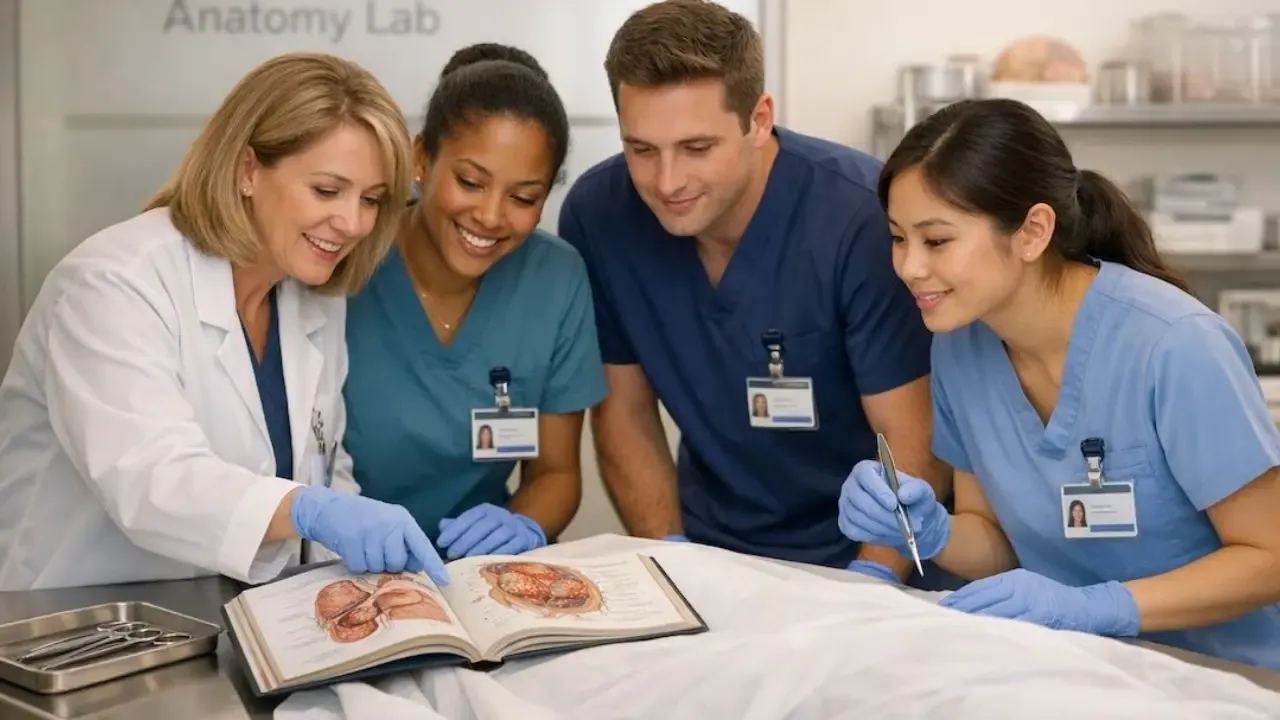
Benefits of Cadaver Labs for Nursing Students
Mar 12, 2026Nursing students often struggle to connect theoretical knowledge with hands-on clinical skills. Cadaver labs help bridge this gap by offering direct interaction with real human anatomy, which helps students:
- Expose students to real anatomical variation and tissue characteristics that are often less evident or absent in standard models or some simulations.
- Cadaver labs are associated with greater confidence in understanding anatomy, spatial relationships, and applying this knowledge to clinical skills.
- Reduce anxiety about working with human anatomy over time.
Anatomy Class: Exploring the Human Body with a Cadaver
@instituteofhumananatomy Super excited to teach from this cadaver! #ScienceIsCool #BiologyClass #BodyDonationIsCool #AnatomyClass ♬ original sound - IOHA
Studies reveal that students in cadaver labs perform better on anatomy tests and report lower anxiety levels as they progress. By observing real conditions like tumors or past surgeries, students gain practical insights not available in textbooks or digital tools. Students often report that cadaver labs improve their confidence, clinical reasoning, and appreciation of real‑world variation, which may support smoother transition to clinical practice, though long‑term outcome data are still limited.
For nursing programs with limited resources, combining cadaver labs with virtual tools or partnering with external organizations can provide a cost-effective solution to improve anatomy education.
Limitations of Traditional Anatomy Education for Nursing Students
Limited Anatomical Understanding from Static Models
Plastic models and textbook illustrations often present anatomy in an idealized and static format, which doesn’t align with the complexities nursing students will face in clinical settings. These tools show structures in fixed, predictable positions, failing to capture the natural variability of human anatomy.
"The fixed nature of plastic models means that students cannot flexibly adjust viewing angles or manipulate structures to understand spatial relationships fully." - American Physiological Society
This rigidity encourages memorization over comprehension, making it harder for students to grasp how anatomical structures interact in real-life scenarios. A study conducted in September 2014 by Michigan State University researchers, including Associate Professor Cary Roseth, highlighted this gap. They compared 233 anatomy students across 14 labs, with some using the "Anatomy and Physiology Revealed" multimedia system and others working with traditional cadavers. Results showed that the cadaver group outperformed their peers, scoring 16% higher in identifying human structures and 11% higher in explaining their functions.
Without opportunities for dynamic, hands-on anatomy learning, students may have fewer chances to develop the spatial reasoning skills that support clinical procedures.
Insufficient Preparation for Clinical Practice
Traditional methods not only limit anatomical understanding but also fall short in preparing students for real-world clinical demands. Surveys of nursing curricula show that some programs provide relatively few contact hours in anatomy and little or no lab-based instruction, leaving students feeling overwhelmed and disconnected from the material.
"Traditional lecture-based approaches... have been criticized for promoting passive learning, poor engagement, and limited retention of anatomical knowledge." - Thomas Ong'ondo Ng'ambwa, Researcher, University of Kabianga
The University of Kabianga in Kenya tackled this issue during the 2024/2025 academic year by introducing a flipped classroom model for 64 first-year nursing students. This method combined traditional teaching with digital video content, resulting in a striking improvement in test scores - from an average of 41.7% to 66.7% (t = 31.00, p < 0.001). While this blended approach enhanced learning outcomes, it still couldn’t fully address the need for tactile and spatial skills that only hands-on anatomical experiences can provide.
How Cadaver Labs Fill the Gaps in Nursing Education
Direct Exposure to Human Anatomy
Cadaver labs replace textbook diagrams and virtual models with the complexity of real human anatomy. Unlike the "ideal" 3D projections in virtual tools, cadavers reveal the natural differences in organ size, color, tissue density, and placement - variations shaped by factors like age, gender, and health conditions.
"Humans are variable. To capture that variability, we need actual cadavers. Students need to know that not everything they encounter may be just as it appears in a textbook or VR."
– Dr. Reed Davis, Assistant Professor of Biology, Baldwin Wallace University
This hands-on exposure offers students a deeper understanding of real-world pathology. Cadavers allow them to observe conditions like tumors, enlarged organs, or signs of past surgeries - details that are often missing in standard models. The tactile experience of handling human tissue and organs engages multiple senses, reinforcing what students have learned in theory. At Penn State's Mueller Lab, nearly 1,000 students benefit from this immersive learning every year.
This approach not only enhances anatomical knowledge but is also perceived by students as helping prepare them for real-world clinical challenges.
Hands-On Practice of Clinical Techniques
Cadaver labs go beyond anatomy lessons - they also provide a safe environment for students to practice clinical skills. These labs offer a controlled space where students can refine techniques like spatial reasoning and manual dexterity, both of which are critical for patient care.
"A future surgeon, you would want them to have their hands on the real person before they do any procedure on anyone."
– Omid Rahimi, Director of the Human Anatomy Program, UT Health Science Center at San Antonio
Working with cadavers also helps students build emotional resilience. The experience of interacting with their "first patient" can initially be overwhelming, but research shows that this anxiety decreases with time and practice. These interactions help shape a strong professional identity and foster a deep respect for the human body.
Benefits of Cadaver Labs for Nursing Students
Better Understanding of Anatomical Variability
Cadaver labs reveal the uniqueness of every human body. They allow students to observe how factors like age, lifestyle, and health conditions shape anatomy - insights that are crucial for accurate patient assessments and treatment planning.
"We tell our students that there are five teachers in the room, and they will learn more anatomy from the four teachers that are on the tables than they will from the instructors."
– John Waters, Teaching Professor of Biology and Anthropology, Penn State
This hands-on experience helps students identify physical signs of disease, such as bone spurs, cartilage damage caused by arthritis, or the brittle texture of osteoporotic bone. The chance to see, touch, and feel these variations provides a depth of understanding that no diagram or virtual model can match. These observations naturally build the confidence required for clinical practice.
Greater Confidence in Clinical Skills
Cadaver labs are invaluable for developing confidence. By working directly with real anatomical structures, students gain the manual dexterity needed for patient care. The tactile experience - like distinguishing between tendons and ligaments - prepares them for real-world clinical procedures.
Improved Readiness for Clinical Challenges
Cadaver labs expose students to the unexpected aspects of human anatomy, such as extra muscles or unusual nerve pathways. This prepares them for the reality that patients often deviate from textbook norms. Cadaver experiences expose students to anatomical variation and mortality in a supervised setting, which many describe as helpful preparation for the emotional and practical demands of clinical work, including caring for critically ill or dying patients.
Stronger Problem-Solving and Team Collaboration Skills
These labs also nurture critical thinking and teamwork, both essential for modern healthcare. Students typically work in small groups, analyzing their findings and connecting anatomical structures to clinical cases. Research using the Readiness for Interprofessional Learning Scale (RIPLS) shows that nursing students who attended cadaver dissection seminars for two or more days experienced notable increases in their readiness for collaborative practice and their understanding of other healthcare roles. This collaborative environment encourages them to think critically about how anatomy impacts patient outcomes, equipping them for the complex decision-making required in clinical settings.
Insane Things I've Found In Dead Bodies
Adding Cadaver Labs to Nursing Programs
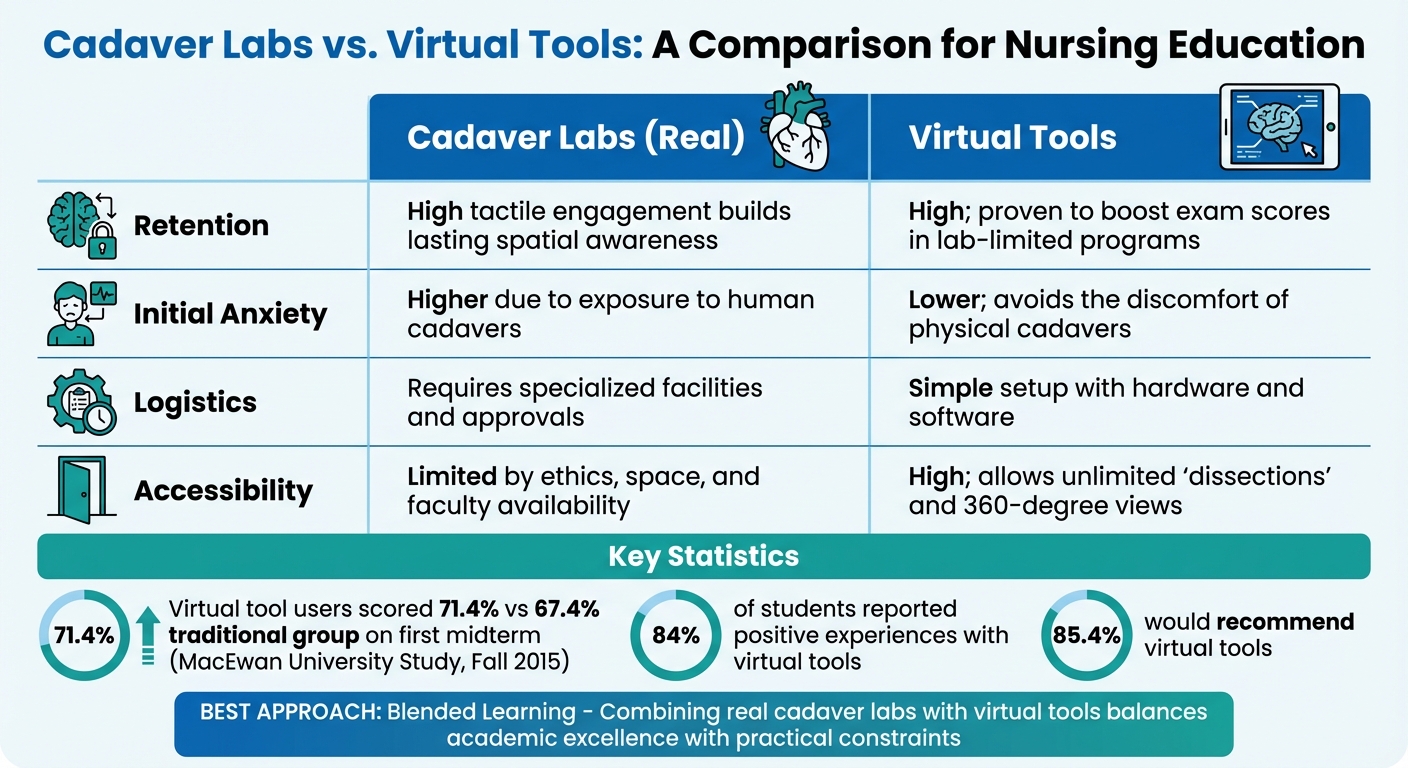
Cadaver Labs vs Virtual Tools for Nursing Education Comparison
Workshops and Hands-On Learning Sessions
Cadaver labs can be seamlessly introduced into nursing programs through targeted, practical sessions. Instead of revamping entire curricula, schools can incorporate cadaver-based workshops into foundational courses like pathophysiology. This approach allows students to see theoretical concepts come alive in three dimensions, offering a more immersive learning experience.
Gradual exposure to cadaver labs can also help manage student anxiety effectively. A study from the University of Arkansas for Medical Sciences followed two groups of undergraduate nursing students (51 and 55 students) during summer pathophysiology courses in 2023 and 2024. Using the State Trait Anxiety Index, researchers noted a significant decline in situational anxiety as the courses progressed - by 3.8 points in the first group (P=0.0068) and 4.4 points in the second (P=0.0023). This step‑by‑step approach can minimize discomfort and is perceived by students as helpful preparation for more advanced lab work.
Using Resources from the Institute of Human Anatomy
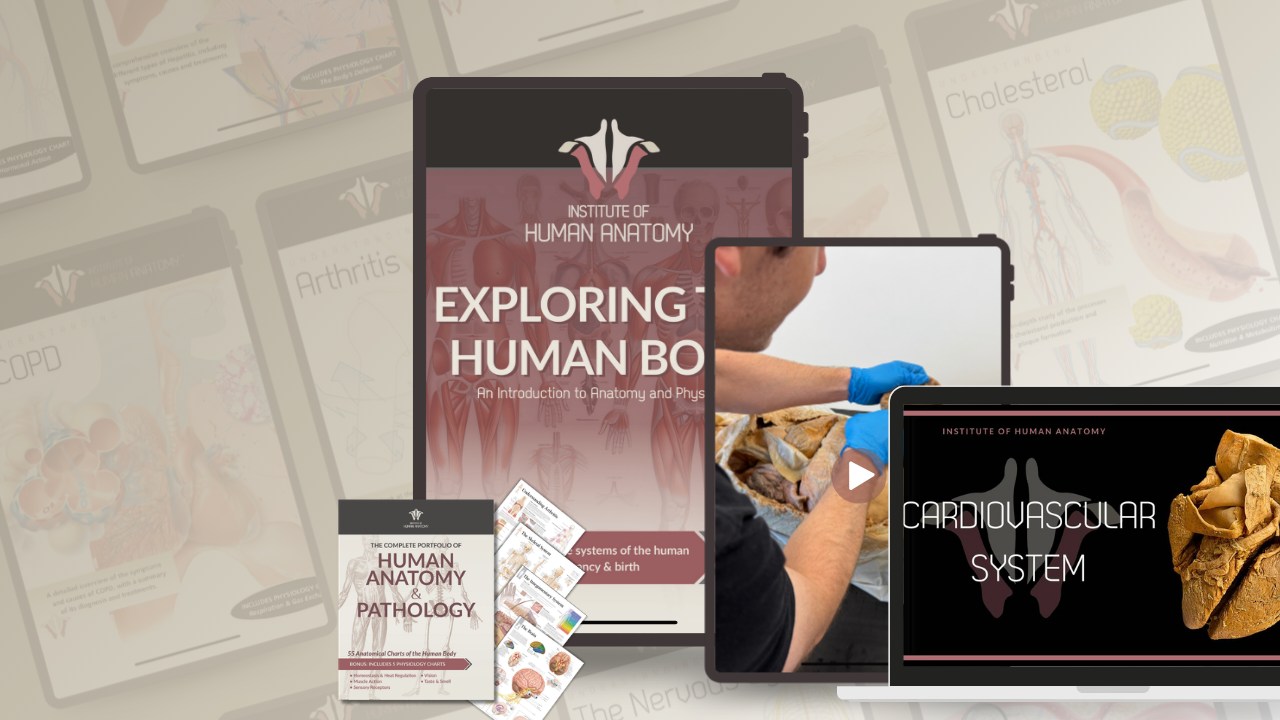
For programs unable to maintain their own cadaver labs, partnerships with organizations like the Institute of Human Anatomy can fill the gap. These collaborations provide access to cadaver-based courses, digital learning tools, and interactive resources, delivering high-quality anatomical education without the logistical and financial demands of running a dedicated lab.
Cadaver Labs vs. Virtual Tools: A Comparison
When it comes to anatomy education, cadaver labs and virtual tools each offer distinct advantages. Real cadaver labs provide unmatched hands-on experience, while virtual tools serve as a practical alternative for programs with limited resources. For example, MacEwan University addressed its lab space constraints in Fall 2015 by introducing the Anatomage Table, a virtual dissection tool. Nursing students using this technology outperformed their peers on the first midterm, scoring 71.4% compared to 67.4% in the traditional group. Additionally, 84% of students reported positive experiences with the virtual tool, and 85.4% said they would recommend it.
| Feature | Cadaver Labs (Real) | Virtual Tools |
|---|---|---|
| Retention | High tactile engagement builds lasting spatial awareness | High; proven to boost exam scores in lab-limited programs |
| Initial Anxiety | Higher due to exposure to human cadavers | Lower; avoids the discomfort of physical cadavers |
| Logistics | Requires specialized facilities and approvals | Simple setup with hardware and software |
| Accessibility | Limited by ethics, space, and faculty availability | High; allows unlimited "dissections" and 360-degree views |
A blended learning approach - combining real cadaver labs with virtual tools - can offer the best of both worlds. This strategy balances academic excellence with practical constraints, equipping nursing students with the skills they need to tackle clinical challenges head-on.
Conclusion
Cadaver labs play a crucial role in nursing education by connecting textbook knowledge to real-world clinical practice. Studies from institutions such as MacEwan University and the University of Arkansas for Medical Sciences show that cadaver‑related and virtual dissection experiences can improve exam performance and that students’ situational anxiety about anatomy labs typically decreases over time.
But the impact of cadaver labs goes far beyond test results. They help nursing students develop critical spatial awareness, a deeper understanding of human anatomy, and, according to student reports, greater emotional readiness and confidence as they move into clinical practice. As Miwa Horiuchi-Hirose, RN, PhD, explains:
"Registered nurses with strong knowledge of anatomy and physiology can explain the theoretical foundation of their nursing practice".
This knowledge strengthens nurses’ ability to communicate effectively with patients and perform accurate clinical assessments.
Incorporating cadaver labs into nursing programs doesn’t just enhance learning - it is intended to better prepare students for the anatomical and clinical challenges they will encounter in modern healthcare, although long‑term outcome data are still emerging. Whether through physical labs, virtual simulations, or collaborations with organizations like the Institute of Human Anatomy, these tools offer a practical way to bridge the gap between theory and practice. In one survey, 60% of students stated that access to advanced anatomical resources would influence their choice of school.
With blended learning approaches making these resources more accessible, cadaver labs provide an evidence-based solution for preparing future nurses to meet the demands of today’s healthcare environment.
FAQs
Are cadaver labs safe for nursing students?
Yes, cadaver labs are generally safe for nursing students as long as established protocols and safety measures are followed. These labs offer an unmatched opportunity for hands-on learning about human anatomy. Though some students may feel anxious or worry about potential health risks, these concerns are usually addressed effectively with proper preparation and guidance.
How can nursing programs add cadaver labs without building a full lab?
Nursing programs can offer cadaver lab experiences without the need to construct a dedicated space by using shared resources or leveraging digital tools. For instance, partnering with medical schools to access their facilities allows nursing students to gain valuable hands-on experience in a collaborative setting. Alternatively, virtual cadavers and digital anatomy platforms provide a flexible and budget-friendly way to teach anatomy, offering realistic and interactive learning opportunities without the logistical challenges of physical dissection.
How should students prepare for their first cadaver lab?
Getting ready for your first cadaver lab can feel a bit overwhelming, but a little preparation can go a long way in easing your nerves. Start by watching dissection videos. These can give you a clearer idea of what to expect and help reduce any anxiety about the process.
Make sure to wear the right clothing - scrubs or a lab coat are ideal. They’re practical and will keep you comfortable during the session. Also, don’t skip a meal beforehand. Having some food in your system can help you stay focused and avoid feeling faint.
It’s completely normal to feel nervous, so remind yourself that many others feel the same way. Finally, take time to go over any pre-lab materials your program provides. Reviewing these resources will not only boost your confidence but also help you better understand what you’ll be doing in the lab.

