
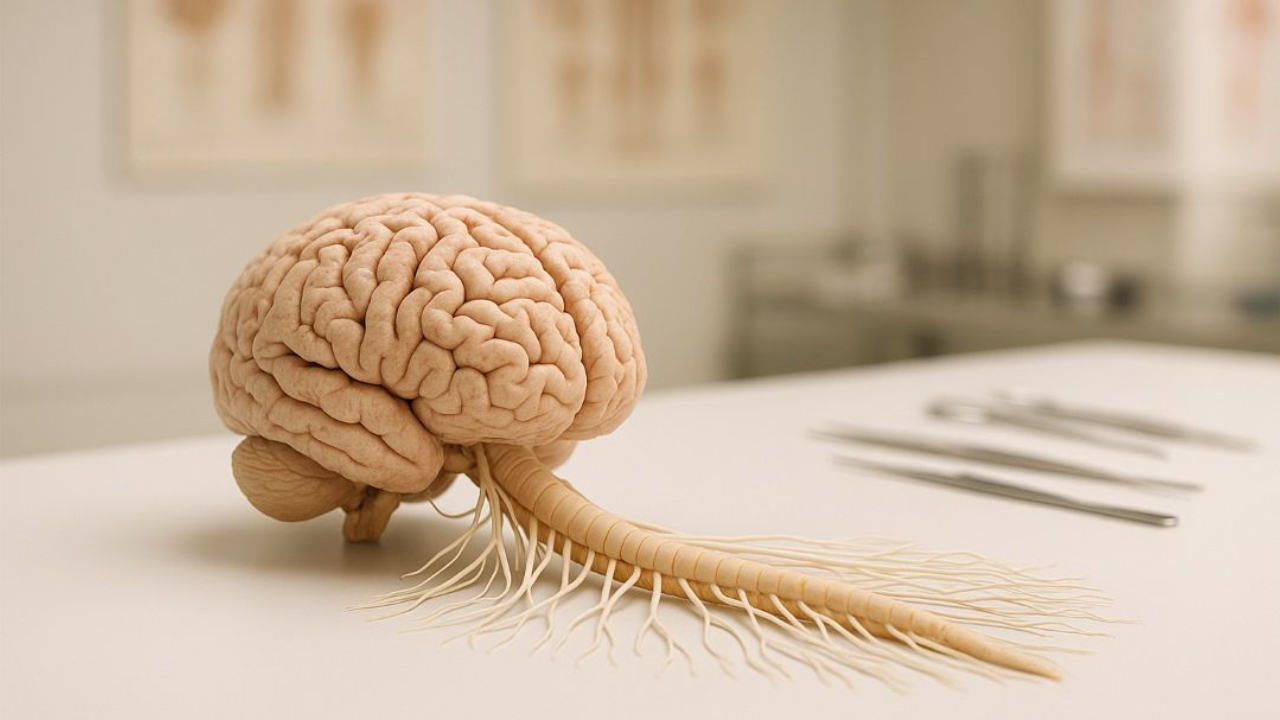
Nervous System Education: Disorders and Cadaver Studies
Jan 04, 2026Cadaver-based learning is irreplaceable for understanding the nervous system. It helps students and professionals connect theoretical knowledge to real anatomy, improving their ability to diagnose and treat neurological disorders. This hands-on approach reveals nerve pathways, anatomical variations, and disease effects in ways textbooks or digital tools can't replicate.
Key Takeaways:
- Hands-On Learning: Cadaver studies allow students to explore 3D structures, nerve branching, and tissue textures.
- Disease Insights: Dissections show physical changes caused by disorders like Parkinson's, Alzheimer's, and spinal injuries.
- Skill Development: Labs refine surgical techniques and motor skills in a controlled environment.
- Ethical Growth: Programs emphasize respect for donors, fostering empathy and professionalism.
➡️ Explore "Understanding the Nervous System" eBook: The Ultimate Guide to Anatomy, Function & Disorders
Institutions like the Institute of Human Anatomy combine cadaver work with digital tools, reaching millions globally. This blend ensures healthcare professionals are better equipped for clinical challenges, both technically and emotionally.
Inside the Brain of a Cadaver | Pathways in the brain
Nervous System Anatomy in Cadaver Studies
The intricate design of the nervous system becomes far more tangible when students engage directly with human tissue. This approach builds on the idea that hands-on experiences deepen understanding in ways that textbooks and diagrams simply cannot. While illustrations reduce three-dimensional structures to flat images, cadaver dissection brings anatomy to life, showcasing the real spatial relationships between the brain, spinal cord, and peripheral nerves. This tactile experience turns abstract concepts into something students can see and feel.
➡️ For a foundational understanding of the nervous system's structure and function, explore our blog: How the Nervous System Works: A Beginner's Guide to Brain and Nerve Function
Main Components of the Nervous System
Cadaver studies provide students with an up-close look at the nervous system's key structures. The brain, spinal cord, and peripheral nerves form a complex network that governs every function of the body. In dissection labs, students can touch and examine these structures, gaining sensory details that digital simulations can't replicate. For example, the brain's tissue feels soft and delicate compared to the firmer texture of peripheral nerves, while the spinal cord's placement within the vertebral column becomes unmistakably clear during dissection.
Beyond the basics, cadaver dissection introduces students to critical anatomical landmarks that surgeons rely on during procedures. The neck's triangular regions, for instance, contain essential nerve pathways that can be traced through surrounding tissues. Similarly, the inguinal canal reveals how nerves navigate intricate anatomical routes, and the hand demonstrates how peripheral nerves branch out to control sensation and movement in specific areas.
Another invaluable aspect of cadaver work is the exposure to natural anatomical variations. Students might encounter a brachial plexus that deviates from textbook depictions or observe blood vessels positioned in unexpected ways. These differences aren't abnormalities - they reflect the natural diversity of human anatomy. Learning to identify and adapt to these variations equips future healthcare professionals to handle the unique presentations they'll encounter in clinical practice.
Dissection also hones practical skills. As students carefully separate layers of tissue to expose neural structures, they develop the precision and patience needed for surgical procedures. These hands-on tasks build fine motor coordination and instrument-handling techniques that are directly applicable to real-world medical scenarios.
Visualizing Neural Pathways and Connections
Tracing neural pathways in cadaver tissue takes learning a step further. This process allows students to follow how nerves branch, connect, and reach their target areas, offering insights that static diagrams can't provide. By physically tracing a nerve from its origin in the spinal cord to its endpoint in muscles or skin, students gain a three-dimensional perspective of the nervous system's layout. These explorations clarify relationships that often remain abstract in two-dimensional images.
🧠 Access the "Exploring the Nervous System" eBook: In-depth guide to Brain, Spinal Cord & Neural Pathways
Cadaver work also engages multiple senses - touch, sight, and even smell - creating vivid memories that stick with students long after their lessons. These sensory experiences deepen their understanding of anatomy and foster a sense of curiosity about the diversity and complexity of human life.
Collaboration in cadaver labs further enhances the learning process. Students often quiz each other on nerve pathways, debate interpretations of anatomical structures, and share discoveries. For instance, if one student finds an unusual nerve branching pattern, the group gathers to investigate, discuss its potential clinical significance, and compare it with standard anatomical references. Faculty guidance during these sessions ensures accurate understanding and reinforces key concepts.
Modern anatomy education often combines cadaver dissection with other learning tools for a more comprehensive approach. Many students supplement their dissection work with physical models, mounted skeletons, and digital anatomy programs. These tools are most effective when paired with cadaver studies, where students can feel the weight of tissues, trace muscle attachments, and grasp spatial relationships in ways that screens alone can't convey.
The Institute of Human Anatomy exemplifies this blended approach. By December 2025, the organization had reached over 24 million followers and amassed more than 2 billion video views, showcasing the global interest in cadaver-based learning. Their use of real human cadavers helps students and medical professionals worldwide grasp the nervous system's complexity in a way that resonates deeply.
Specialized training programs also rely on cadaver labs for advanced skill-building. Neurosurgery trainees, for example, practice intricate procedures on the brain and nervous system in highly controlled environments equipped with surgical tools. These labs allow surgeons to refine their precision and technique before operating on living patients. Similarly, spinal surgery programs use cadaver labs to help surgeons perfect methods for treating spinal conditions, ultimately improving patient outcomes through this hands-on practice.
The combination of tactile exploration, visual observation, and collaborative learning does far more than teach students to memorize nerve names and pathways. It develops their spatial reasoning, sharpens their ability to identify anatomical variations, and builds the manual dexterity required for clinical work. Along the way, students gain a profound respect for the complexity of the human body and the individuals who donated their remains to advance medical education. This immersive experience lays a strong foundation for understanding neurological disorders and applying that knowledge in clinical settings.
Neurological Disorders and Cadaver-Based Education
Memorizing symptoms isn’t enough when it comes to understanding neurological disorders. Cadaver studies reveal the physical changes these conditions cause in the brain, spinal cord, and peripheral nerves. By examining these changes firsthand, healthcare professionals can connect clinical symptoms to the actual damage within the nervous system. This hands-on approach transforms abstract descriptions into something visible and tangible, bridging the gap between theory and practice.
Cadaver studies offer insights that textbooks and imaging simply can’t replicate. Through direct observation, students can see tissue atrophy, disrupted neural connections, and other physical effects of disease. This tactile and visual experience helps create lasting mental associations, making it easier to recognize patterns and understand why certain treatments succeed while others don’t. Let’s explore how cadaver studies reveal the anatomical changes behind various neurological disorders.
Degenerative Neurological Disorders
Degenerative diseases slowly destroy the nervous system, and cadaver dissection makes this destruction visible. For example, in Parkinson’s disease, students can observe the loss of dopamine-producing neurons in the substantia nigra, a small but vital area deep in the brain. Seeing this degeneration helps explain hallmark symptoms like tremors, muscle rigidity, and slowed movement.
Alzheimer’s disease, on the other hand, presents more dramatic changes. Cadaver studies reveal significant brain shrinkage, especially in the hippocampus and cortical regions responsible for memory and higher thinking. Students can compare healthy and diseased brains, noticing not only the reduced size of the hippocampus but also the difference in tissue texture. This hands-on experience makes the impact of Alzheimer’s very real, showing how the disease physically dismantles the brain's ability to form and retain memories.
Dissections also allow students to explore the three-dimensional structure of the brain, examining how damage spreads across interconnected regions. They can rotate specimens, trace pathways, and understand the spatial relationships between affected areas. This kind of exploration is invaluable for interpreting brain scans and discussing treatment plans with patients and families.
Another key lesson comes from examining multiple specimens. Not all brains affected by the same disease show identical damage. For instance, two patients with Parkinson’s or Alzheimer’s may have experienced the disease for the same duration but show different levels of atrophy. These variations teach future practitioners that each patient’s journey is unique, preparing them for the variability they’ll encounter in real-world care.
Alzheimer's vs Dementia
Spinal Cord and Peripheral Nerve Injuries
Cadaver studies also highlight the delicate nature of the spinal cord and peripheral nerves. By examining specimens with spinal cord injuries, students can see how damage disrupts the organization of white and gray matter, cutting off communication between the brain and body. This hands-on learning helps clarify why injuries at different spinal levels cause distinct patterns of paralysis and sensory loss.
For surgical trainees, cadaver labs provide a safe environment to practice techniques for treating spinal and nerve injuries. They can refine their motor skills and learn to handle instruments with precision, all while studying the complex relationships between vertebrae, ligaments, and neural tissue. This practice is essential for mastering delicate procedures before transitioning to live patients.
Peripheral nerve injuries present another opportunity for skill-building. In cadaver labs, students can practice nerve repair, grafting, and reconstruction. They learn to align nerve endings correctly, manage scar tissue, and work with surrounding structures to encourage healing. The ability to make mistakes and learn from them in this controlled setting is invaluable, helping future surgeons develop the precision required for neurosurgery.
Working with injured nerve tissue also provides a deeper understanding of the challenges involved in nerve repair. For instance, students discover how scar tissue complicates surgical approaches and why precise alignment of nerve endings is critical for regeneration. These lessons go beyond theory, giving students a hands-on appreciation of the complexities they’ll face in practice.
Carpal Tunnel Syndrome & the Median Nerve
REAL Human Spinal Cord & Herniated Discs
Other Common Neurological Conditions
Cadaver studies also enhance understanding of conditions like strokes and cerebrovascular diseases. By tracing cerebral arteries in cadavers, students can see how blockages in specific vessels lead to distinct deficits. They can follow major arteries like the carotid and vertebral arteries, visualizing the areas they supply and understanding how blood flow disruptions cause neurological symptoms.
In addition, cadaver specimens often reveal conditions like atherosclerotic plaques or aneurysms. Observing these structural abnormalities helps students connect physical changes to clinical symptoms in ways imaging studies alone can’t achieve. This hands-on exploration also highlights how collateral circulation develops, explaining why some stroke patients recover better than others.
Infections of the nervous system, such as meningitis and encephalitis, become clearer through cadaver work as well. Students can examine the meninges - the dura mater, arachnoid mater, and pia mater - and see how inflammation affects these protective layers. Dissecting these specimens also reveals the cerebrospinal fluid pathways, helping students understand how infections spread and cause damage.
By studying brain tissue affected by encephalitis, students gain a deeper understanding of the physical damage caused by inflammation. This knowledge is crucial for recognizing the clinical signs of such infections and appreciating the urgency of treatment. The ability to connect textbook knowledge with real anatomical changes reinforces a more comprehensive understanding of these conditions.
Through cadaver labs, students develop the ability to recognize patterns and identify anatomical signatures of different disorders. They also gain a deeper appreciation for the complexity and fragility of the nervous system. This experience not only builds their clinical knowledge but also fosters a more thoughtful and empathetic approach to patient care. The hands-on learning provided by cadaver studies creates a foundation that supports better decision-making and procedural skills throughout their medical careers.
Cadaver Studies in Education and Professional Training
Cadaver-based learning has long been a cornerstone of medical education, offering an irreplaceable, hands-on experience that digital tools simply can’t match. Working directly with real human tissue leaves a lasting impact, helping students develop fine motor skills and the ability to distinguish normal tissue from abnormal. These practical skills, gained through dissection, go hand in hand with the anatomical knowledge discussed earlier.
But it’s not just about the basics. Cadaver studies also sharpen instrument-handling techniques and improve diagnostic precision. They expose students to anatomical variations - like unusual nerve branching or unexpected organ placement - reinforcing the reality that every patient is unique.
Benefits for Students and Healthcare Professionals
Cadaver labs do more than teach technical skills; they also cultivate essential interpersonal qualities. These labs create an active learning environment where students engage in peer discussions and receive direct guidance from faculty. Activities like donor blessing ceremonies, guided reflections, and memorial services encourage empathy and respect for the human body, which builds professionalism and compassionate care.
For healthcare professionals already in practice, cadaver labs serve as a valuable resource for continuing medical education (CME). These programs offer opportunities to refine existing skills and master new techniques in fields like neurosurgery, otolaryngology, spinal surgery, and orthopedics. CME programs often combine cadaver dissection with digital tools and physical models, catering to a range of learning preferences while reinforcing critical anatomical concepts.
Institutions Using Cadaver-Based Education
Recognizing the many benefits of cadaver-based learning, educational institutions across the United States have heavily invested in advanced dissection labs and surgical training facilities. One standout example is the Institute of Human Anatomy in Salt Lake City, UT. As of December 2025, the institute has amassed over 24 million followers and 2 billion video views, offering a comprehensive anatomy education that blends real cadaver studies with digital resources and an AI assistant named "AI Jonathan."
This dedication to hands-on dissection highlights a crucial point: while virtual tools can enhance learning, only immersive, real-world experience can fully prepare healthcare providers to deliver exceptional patient care.
Conclusion: The Continued Role of Cadaver Studies in Nervous System Education
Even with the rise of digital tools and virtual anatomy programs, cadaver-based education holds a crucial place in understanding the nervous system and its disorders. The intricate, three-dimensional structure of neural pathways, the delicate texture of nervous tissue, and the unique variations in individual anatomy are aspects that screens and simulations simply cannot replicate.
For many healthcare professionals, the experience of cadaver dissection leaves an indelible mark on their careers. Neurosurgeons and neurologists, in particular, gain the precision, clinical judgment, and detailed anatomical knowledge needed to manage complex neurological conditions through these hands-on experiences.
While virtual anatomy platforms offer excellent supplemental resources, they fall short of replacing cadaveric dissection. The tactile experience - feeling the weight of the brain, distinguishing between gray and white matter, and observing the layers of fascia - creates lasting impressions that guide clinical decision-making. These physical interactions help healthcare providers recognize anatomical variations and unusual presentations of neurological conditions long after their initial training.
Beyond technical expertise, cadaver labs play a key role in fostering empathy and professional ethics. Through ceremonies honoring donors, students learn to balance the professional distance needed for effective treatment with the humanity required for patient-centered care. This unique environment helps future healthcare providers approach nervous system disorders with both scientific accuracy and genuine compassion.
Moving forward, the most effective educational models blend the foundational value of cadaver-based learning with digital advancements. Institutions like the Institute of Human Anatomy exemplify this approach, using cadaver studies as the core teaching method while incorporating digital tools like "AI Jonathan" to enhance the learning experience. With over 24 million followers and 2 billion video views as of December 2025, their success underscores the enduring importance of cadaver-based education in training healthcare professionals to diagnose and treat neurological disorders.
Ultimately, the hands-on skills and insights gained in cadaver labs directly contribute to improved patient care and outcomes. As long as the nervous system remains one of the most intricate and clinically significant parts of the human body, cadaver studies will continue to be a cornerstone of medical education.
🧠 Test Your Knowledge: Get the Ultimate Nervous System Quiz Pack Here
FAQs
Why is learning with cadavers essential for understanding the nervous system compared to using digital tools or textbooks?
Cadaver-based learning provides a hands-on experience that's hard to replicate with digital tools or textbooks. By working with real human cadavers, students and professionals can explore the complexity of the nervous system in a way that feels tangible and immediate. It allows them to see anatomical structures, variations, and spatial relationships that are often challenging to fully grasp through other methods.
This method also sheds light on how the nervous system interacts with other bodily systems, offering key insights essential for diagnosing and treating various disorders. Studying real human anatomy fosters a deeper understanding of the nervous system's intricacies, equipping learners to apply this knowledge effectively in both medical practice and education.
How do cadaver studies enhance understanding of neurological disorders like Parkinson's and Alzheimer's?
Cadaver studies offer an invaluable opportunity to examine the physical effects of neurological disorders in a way that textbooks or digital models simply can't replicate. By working with real human anatomy, students and medical professionals gain a clearer view of how conditions like Parkinson's and Alzheimer's alter the brain, nerves, and other structures over time.
This hands-on experience goes beyond theory, providing a practical understanding of disease progression. It equips healthcare providers with sharper diagnostic skills and a deeper grasp of treatment approaches, ultimately enhancing patient care.
How do cadaver studies combined with digital tools improve medical education and understanding of the nervous system?
Combining cadaver studies with digital tools brings a well-rounded, hands-on dimension to medical education, especially when studying the nervous system. Cadaver-based learning offers the invaluable opportunity to observe actual anatomical structures up close, providing a realistic perspective that textbooks alone can't achieve. Meanwhile, digital tools like interactive videos and detailed study guides enhance this experience by breaking down complex concepts with visuals and clear explanations.
This mix of traditional and modern methods not only makes it easier to understand intricate topics but also bridges the gap between theory and practice. Plus, it accommodates various learning styles, helping students and professionals gain a more thorough understanding of the nervous system and the effects of its disorders.

