
Energy Substrates in Exercise: Hormonal Regulation Guide
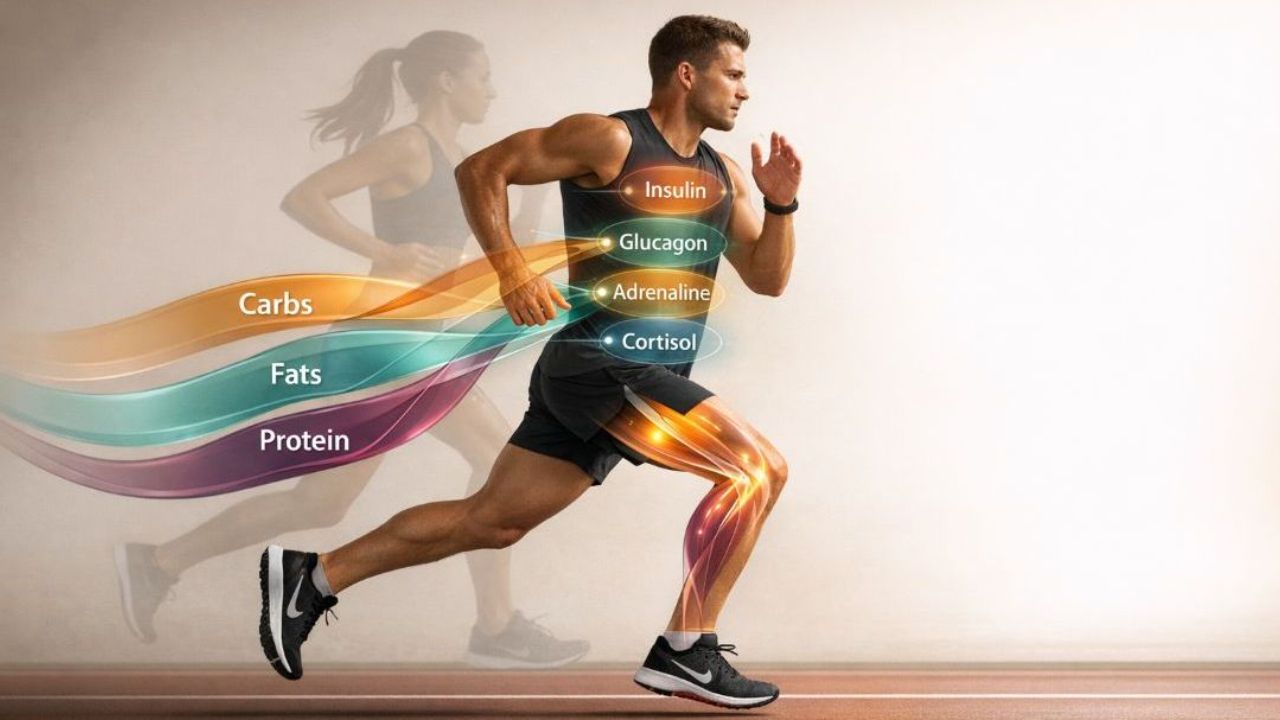
Apr 30, 2026When you exercise, hormones strongly influence which energy sources, carbohydrates, fats, or proteins, are used, alongside factors like intensity, duration, training status, and diet.
These hormones, like insulin, glucagon, and cortisol, act as managers, ensuring your muscles get the energy they need while keeping blood sugar levels stable. Here's a quick breakdown:
- Low-intensity exercise (<45% VO₂max): Fat is the primary energy source, thanks to lower insulin and moderate catecholamine levels.
- At moderate intensities (roughly 40–65% VO₂max): Fat oxidation typically peaks, aided by catecholamines and growth hormone–stimulated lipolysis.
- High-intensity exercise (>75% VO₂max): Carbohydrates take over as glycogen and blood glucose become the main fuels.
Training impacts how efficiently your body uses these fuels. Endurance training improves the ability to use fat and can spare glycogen, while resistance training stimulates muscle repair and growth primarily through mechanical loading and local signaling, with hormones like testosterone and growth hormone playing supporting roles. Understanding these processes helps optimize your workouts, nutrition, and recovery.
Want to know how hormones like cortisol, insulin, and growth hormone regulate energy during exercise? Keep reading for a detailed guide.
Hormones That Control Energy Use During Exercise
A network of hormones works together to regulate energy use during exercise. These chemical messengers ensure your muscles get the right fuel at the right time, keeping blood sugar levels stable and optimizing performance. Building on their role in ATP production, here's how specific hormones influence fuel selection during physical activity.
Insulin: Glucose Uptake and Storage
During dynamic exercise in healthy people, insulin usually decreases, while other glucoregulatory hormones rise to support glucose availability. This decline is more noticeable in longer, low-intensity workouts compared to short, high-intensity sessions. Lower insulin levels allow other hormones - like glucagon, catecholamines, cortisol, and growth hormone - to take over and release stored energy from the liver and fat tissue.
At rest and after meals, insulin helps glucose enter cells by moving GLUT4 transporters to the cell membrane. It also promotes glycogen storage in the liver and muscles while blocking glycogen breakdown. However, during exercise, muscle contractions activate GLUT4 transporters via insulin‑independent pathways (involving calcium‑ and kinase‑mediated signaling), increasing muscle glucose uptake many‑fold above resting levels.
"Insulin is the only glucoregulatory hormone that decreases with exercise under normal physiologic conditions."
– Eric Cressey, Founder, EricCressey.com
What Diabetes Does to the Body | Can You Reverse It?
Catecholamines: Breaking Down Fat for Energy
Epinephrine and norepinephrine, collectively known as catecholamines, play a key role in breaking down fat during exercise. They bind to β-adrenergic receptors on fat cells, activating enzymes like hormone-sensitive lipase and adipose triglyceride lipase to release free fatty acids and glycerol.
As exercise intensity increases, catecholamine levels rise. During moderate activity at 45–65% VO₂max, these levels climb steadily, aligning with peak fat oxidation. However, at higher intensities (70–85% VO₂max), epinephrine levels spike dramatically - running at 70% VO₂max, for instance, can boost epinephrine by about 158%. While this surge enhances fat breakdown in muscles, overall fat oxidation may drop as the body shifts to carbohydrate metabolism.
Fat tissue stores vastly more energy than glycogen—on the order of dozens of times more in a lean adult. In a lean adult male, fat tissue holds roughly 17,500 mmol of triacylglycerols compared to just 300 mmol in skeletal muscle. Catecholamines regulate fat breakdown through a balance of β-receptor activation and α₂-receptor inhibition.
Glucagon: Releasing Stored Glycogen
When blood sugar drops during exercise, the pancreas releases glucagon to signal the liver to release glucose. Glucagon primarily acts through glycogenolysis (breaking down stored glycogen) and gluconeogenesis (creating new glucose from non-carbohydrate sources). This hormone helps prevent blood sugar from falling to hypoglycemic levels, which in many adults is considered below about 70 mg/dL. After meals, blood sugar levels may rise to 120–140 mg/dL, returning to normal within about two hours. Glucagon’s quick response is vital for avoiding issues like impaired coordination and thinking caused by low glucose levels.
Cortisol: Protein Breakdown and Glucose Production
Cortisol takes a different approach to energy management. While glucagon provides immediate glucose, cortisol ensures a steady supply of substrates for longer-term energy production. It breaks down muscle proteins into amino acids and promotes fat breakdown in adipose tissue, releasing glycerol and fatty acids.
Cortisol levels tend to rise during prolonged or higher‑intensity exercise, especially once intensity and duration are sufficient to create significant metabolic stress. It works alongside glucagon to enhance gluconeogenesis, creating new glucose when glycogen stores deplete. Cortisol also limits glucose uptake in muscles and fat cells, reserving the liver’s limited glucose output for the central nervous system. This encourages muscles to rely on fatty acids for energy.
"Cortisol and the other glucocorticoids are not the 'bad guys' of exercise endocrinology as some have made them out to be. Researchers, athletes and sports coaches need to be aware of the critical nature of glucocorticoids to normal health and development."
– Anthony C. Hackney, PhD, University of North Carolina
Cortisol also aids in synthesizing epinephrine by inducing the enzyme that converts norepinephrine to epinephrine, further supporting energy mobilization.
Growth Hormone: Fat and Carbohydrate Balance
Growth hormone complements cortisol by fine-tuning fuel selection during intense exercise. At VO₂max, plasma growth hormone levels can increase up to 25 times their resting levels. This dramatic rise promotes fat breakdown and oxidation, reducing dependence on carbohydrates and extending endurance. By shifting the balance toward fat oxidation, growth hormone helps conserve glucose for critical functions.
Gender Differences in Energy Substrate Use
Biological sex plays a key role in how the body uses energy during exercise. Hormonal differences, especially involving estrogen and progesterone, largely explain why men and women might respond differently to similar workouts.
Estrogen and Progesterone: Effects on Fat and Carbohydrate Use
Estrogen tends to promote greater fat use and may help conserve glycogen and improve insulin sensitivity under many exercise conditions. This hormone supports the body’s ability to rely more on fat for energy, which can help preserve muscle glycogen during endurance activities.
Progesterone often counteracts some of estrogen’s effects and can shift metabolism toward greater carbohydrate use, although this depends on the balance between these hormones and exercise conditions. An earlier study in the American Journal of Physiology-Endocrinology and Metabolism
by D’Eon et al. examined this dynamic by manipulating hormones in eight women (ages 18–35). Researchers found that in an estrogen-only environment, carbohydrate oxidation dropped to 1.05 grams per minute from a baseline of 1.26 g/min. However, adding 200 mg of oral progesterone daily brought carbohydrate oxidation back to 1.27 g/min.
"estrogen lowers CHOox [carbohydrate oxidation] by reducing EMGU [estimated muscle glycogen utilization] and glucose Rd [rate of disappearance]. Progesterone increases EMGU but not glucose Rd."
– D'Eon et al.
Hormonal shifts during the menstrual cycle can influence substrate use, but findings are mixed. Some studies suggest higher estrogen and lower progesterone favor greater fat oxidation, whereas higher progesterone may reduce this effect, bringing carbohydrate use closer to baseline. These changes can directly impact performance and energy use during exercise.
Male vs. Female Energy Substrate Preferences
Men and women differ in their preferred energy sources during exercise. Men usually rely more on carbohydrates, while women tend to favor fat oxidation at the same relative intensity [[3]]. This difference is reflected in the respiratory exchange ratio (RER), a measure of fuel use. A 2021 meta-analysis in the European Journal of Applied Physiology reviewed 35 studies and found that sedentary men had an RER 0.03 points higher than women, while athletic men showed an RER 0.02 points higher. Higher RER values signify greater carbohydrate use.
| Population | RER Difference (Men vs. Women) | Primary Fuel (Women) | Primary Fuel (Men) |
|---|---|---|---|
| Sedentary | +0.03 | Lipids (Fats) | Carbohydrates |
| Athletic | +0.02 | Mixed/Lipids | Carbohydrates |
Women appear to be better equipped for fat oxidation during endurance exercise, with larger intramyocellular lipid stores and evidence of greater capacity to use these lipids for fuel. Some studies suggest sex differences in adrenergic regulation of fat breakdown, with women showing adipose tissue that is more sensitive to lipolytic signals, which may support greater fat mobilization during moderate exercise. These differences are most noticeable in sedentary or recreationally active individuals. Among highly trained athletes, this fat oxidation advantage in women diminishes significantly.
Oral Contraceptives and Energy Metabolism
Oral contraceptives, which contain synthetic forms of estrogen and progestin, alter the natural hormonal fluctuations of the menstrual cycle and can influence hormones related to energy metabolism. The specific effects depend on the type and dosage of hormones used, but current evidence suggests relatively small or inconsistent effects on fuel use during typical exercise. Research in this area is limited because many studies exclude women on birth control to reduce variability in results.
Exercise Intensity and Fuel Source Selection
Exercise Intensity and Fuel Source Selection: How Your Body Chooses Energy
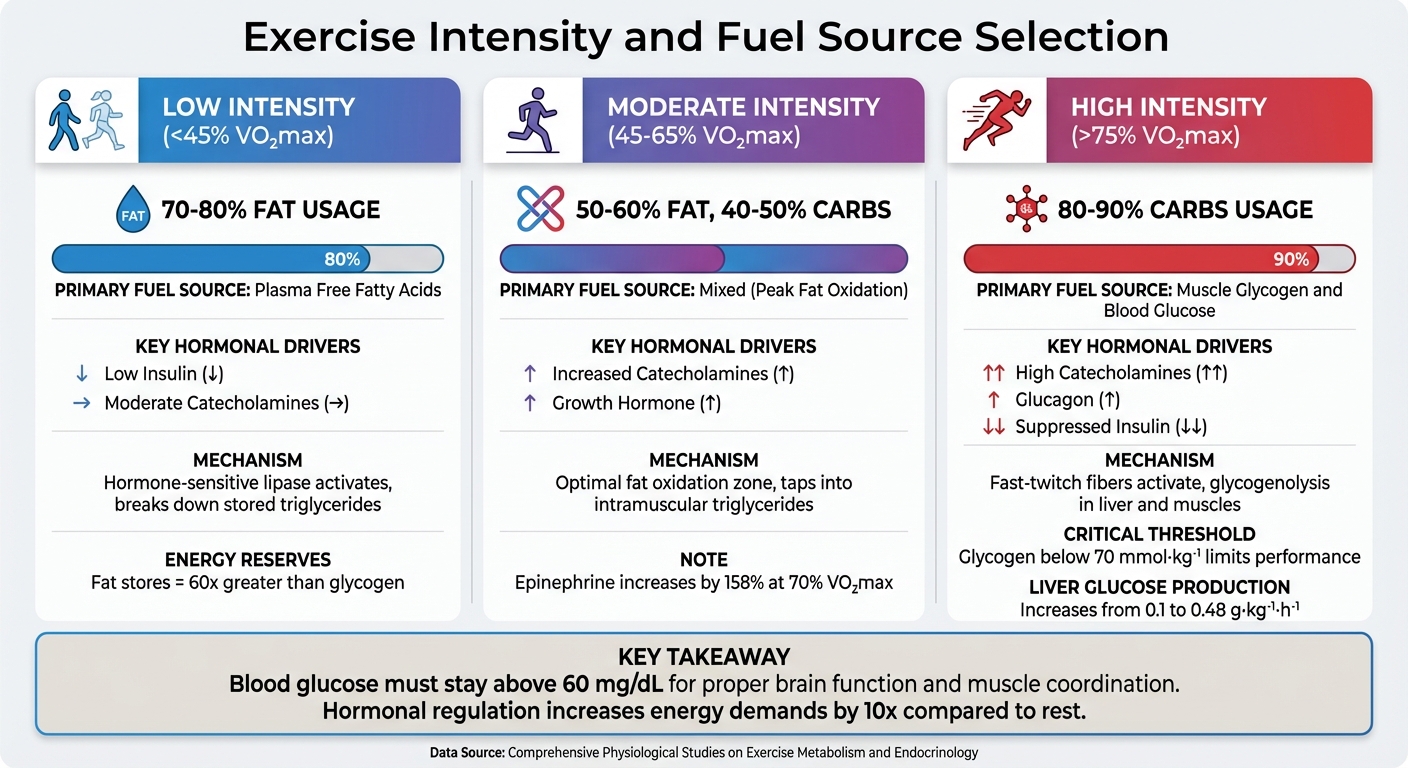
The intensity of your exercise plays a huge role in determining which fuel source your body uses. As you push harder, hormonal changes shift your energy preference from fat to carbohydrates. This explains why a leisurely walk feels so different from an all-out sprint. These shifts also tie back to the hormonal responses mentioned earlier.
Low-Intensity Exercise: Fat Takes the Lead
When exercising at a low intensity (below 45% of your VO₂max), your body primarily burns fat. Why? Because the hormonal environment supports fat oxidation. Insulin levels drop, which removes the brakes on fat breakdown. At the same time, moderate increases in catecholamines (like epinephrine and norepinephrine) signal fat cells to release free fatty acids into your bloodstream.
Here's how it works: these hormones activate an enzyme called hormone-sensitive lipase, which breaks down stored triglycerides. This process ensures a consistent supply of fatty acids for your muscles. As you increase the intensity to a moderate level (45–65% of VO₂max), fat oxidation hits its peak. Higher catecholamine levels and growth hormone further enhance fat breakdown, tapping into both stored fat and intramuscular triglycerides. However, as intensity ramps up, your body starts to shift from fat to carbohydrates for quicker energy.
There's Only ONE Way Your Body Burns Fat
High-Intensity Exercise: Carbs Take Over
Once you cross into high-intensity territory (75–85% of VO₂max or more), carbohydrates become your body’s go-to fuel source. Muscle glycogen and blood glucose can be metabolized rapidly to meet the soaring energy demands. This shift is driven by a sharp increase in catecholamines, which trigger glycogen breakdown (glycogenolysis) in both the liver and muscles.
At these intensities, your fast-twitch (Type II) muscle fibers kick in. These fibers are specifically designed for carbohydrate metabolism, making them more efficient at handling the workload. Fat oxidation, on the other hand, takes a backseat. The enzyme CPT-I, which helps transport fatty acids into mitochondria for energy, becomes less effective. Plus, lactate buildup during high-intensity efforts further limits the release of fatty acids from fat stores.
| Exercise Intensity | Primary Fuel Source | Key Hormonal Drivers |
|---|---|---|
| Low (<45% VO₂max) | Plasma Free Fatty Acids (Fat) | Low Insulin, Moderate Catecholamines |
| Moderate (45–65% VO₂max) | Mixed (Peak Fat Oxidation) | Increased Catecholamines, Growth Hormone |
| High (>75% VO₂max) | Muscle Glycogen and Blood Glucose (Carbohydrate) | High Catecholamines, Glucagon, Suppressed Insulin |
These transitions highlight the importance of muscle and liver glycogen, which together account for only a few percent of your body’s total stored energy During intense exercise, glycogen depletion becomes a limiting factor. For example, as muscle glycogen falls to low levels, it becomes progressively harder to sustain high‑intensity efforts; many studies report marked fatigue when glycogen is substantially depleted. During intense exercise, liver glucose production can increase several‑fold above resting levels to help maintain blood glucose.
Training Adaptations and Hormonal Changes
Exercise doesn’t just build muscle or improve endurance - it sparks lasting hormonal shifts that fine-tune how your body uses energy. With consistent training, your hormones adapt, making you better at burning fat and conserving glycogen. Whether you’re pounding the pavement or lifting weights, these changes occur, though the specifics differ between endurance and resistance training. Let’s dive into how each type of exercise uniquely reshapes your hormonal responses for smarter energy use.
Endurance Training Effects on Hormone Function
Endurance training fundamentally transforms your metabolism, teaching your body to rely more on fat for fuel. After several weeks of high‑intensity or aerobic training, muscles upregulate fatty acid transport proteins such as FAT/CD36 and FATP4, especially at the mitochondrial membrane, enhancing capacity for fat uptake and oxidation. Think of these proteins as gateways, shuttling fatty acids into your mitochondria to be burned for energy.
But it doesn’t stop there. The enzymes responsible for breaking down stored fat - Hormone-Sensitive Lipase (HSL) and Adipose Triglyceride Lipase (ATGL) - are 2–3 times higher in endurance-trained individuals compared to those who are untrained. This means your body becomes highly efficient at tapping into intramuscular triglycerides, a fat reserve stored directly in your muscle cells. These reserves offer an energy supply 60 times greater than your glycogen stores.
"Endurance-trained subjects displayed a higher maximal fat oxidation rate, a greater proportion of type I muscle fibers and higher intramuscular lipids content compared to untrained individuals." – Antonella Muscella, Department of Biological and Environmental Science and Technologies
This shift to fat oxidation provides a key advantage: glycogen sparing. Your body learns to conserve its limited carbohydrate stores for moments of high-intensity effort. For example, trained individuals show reduced plasma glucose turnover and oxidation during moderate-intensity exercise. Additionally, endurance training increases the mitochondrial volume density in your muscles, amplifying your capacity for fat oxidation at intensities between 45% and 65% VO₂max. Even recovery gets a boost - plasma glycerol and free fatty acid levels drop more quickly after exercise in trained individuals compared to those who are untrained.
Resistance Training and Hormone Responses
Resistance training activates a completely different hormonal response, focusing on muscle growth and repair rather than fuel efficiency. Within 15–30 minutes of a resistance workout, testosterone and GH typically rise transiently. Testosterone supports protein synthesis and muscle repair, and may also influence glucose handling and glycogen storage over time. Testosterone also helps activate satellite cells, which are important for muscle repair and growth.
"Testosterone is the primary anabolic hormone, and its concentration changes during the recovery period depending on the upregulation or downregulation of the androgen receptor." – Journal of Applied Physiology
The structure of your workout also matters. Shorter rest periods - around one minute - can trigger higher GH levels compared to longer breaks. To support recovery, many guidelines suggest consuming adequate protein (around 0.3–0.4 g/kg) and carbohydrates around training and across the day, rather than relying on a single precise pre‑ and post‑workout dose. This strategy reduces cortisol’s muscle-breaking effects while enhancing insulin response and IGF-1 levels, especially during back-to-back training days.
While resistance training primarily relies on carbohydrates during the workout, over time it can improve insulin sensitivity and certain blood lipid markers. For instance, six months of resistance exercise has been shown to significantly lower apo B48 - a marker found in chylomicrons - in diabetic adults. Both endurance and resistance training ultimately improve how your body manages energy, but they do so through distinct hormonal pathways, ensuring your energy systems are working efficiently.
Conclusion
Hormonal regulation plays a key role in managing energy supply during exercise, orchestrating a response that can increase energy demands by more than ten times compared to resting levels. As exercise begins, insulin levels drop, while glucagon and catecholamines kickstart the process of fuel mobilization. Cortisol contributes to gluconeogenesis, partly by increasing protein breakdown, while growth hormone promotes fat mobilization and also influences carbohydrate and protein metabolism.
The type of fuel your body uses during exercise depends heavily on intensity. At low to moderate intensities (roughly up to ~60–65% VO₂max), fat provides a major share of the energy, helping to conserve glycogen stores. On the other hand, high-intensity efforts (above 80% VO₂max) shift the focus to carbohydrate metabolism[[3]](https://www.unm.edu/~lkravitz/Article folder/hormoneswomen.html). Training also influences these processes: endurance training enhances the muscles' ability to utilize fat, while resistance training triggers hormonal responses that promote muscle growth and bone strength.
Understanding these mechanisms can shape smarter training and nutrition strategies. For instance, appropriate timing of carbohydrate intake can help prevent hypoglycemia and maintain performance during prolonged exercise, and well‑designed resistance training combined with adequate nutrition can support strength gains and recovery.
If you're curious about the anatomical structures behind these processes - from pancreatic islets releasing insulin to adrenal glands secreting catecholamines - the Institute of Human Anatomy provides in-depth resources. Their hands-on cadaver-based education and digital guides offer a visual and practical understanding of how these physiological systems function, making the connection between hormones and human anatomy clearer than ever.
FAQs
How can I estimate my VO₂max intensity zones without lab testing?
You can estimate VO₂max‑related intensity zones using simple heart‑rate methods or field tests. A common starting point is to estimate your maximal heart rate (for example, with age‑based formulas) and then define zones as percentages of this value, keeping in mind that these are approximations. For example:
- Zone 1: 50–60% of HRmax
- Zone 2: 60–70% of HRmax
Another option is the "talk test", where you measure intensity by how easily you can hold a conversation during exercise. If you're struggling to speak, you're likely in a higher intensity zone.
For a more precise estimate, try a timed run, like a 1-mile test. Compare your pace to established fitness norms to get a rough idea of your VO₂max. These methods are simple yet effective for tailoring your training intensity.
Should I eat carbs before or during long workouts to avoid low blood sugar?
Eating carbohydrates before a long workout can help support blood glucose and reduce the risk of energy dips during prolonged exercise, providing readily available fuel for performance.
How does my menstrual cycle or birth control affect which fuel I burn?
Your menstrual cycle and birth control play a role in how your body manages energy during workouts. Hormonal changes, such as shifts in estrogen and progesterone levels, can affect whether your body relies more on carbohydrates or fats for fuel. For instance, estrogen may encourage your body to burn more fat, while progesterone tends to increase carbohydrate usage. If you're using hormonal contraceptives, these fluctuations are regulated, often resulting in steadier energy use that leans more toward carbohydrates compared to the natural cycle.

